25 Easy Bento Box Lunch Ideas for School, with simple, kid-friendly meals, meal-prep tips, and picky eater options.
Packing school lunches can become surprisingly repetitive. After a few weeks of sandwiches, fruit, yoghurt and the same familiar snacks, it is easy to run out of ideas, especially when you are trying to prepare something that is nutritious, practical to pack and appealing enough for your child to actually eat.
That is where bento-style lunches can be particularly useful.
Instead of relying on one main meal, a bento box allows you to combine several smaller foods in separate compartments. A typical school bento might include a sandwich or wrap, fresh fruit, vegetables, cheese and a small snack, giving children variety without requiring an elaborate meal.
These easy bento box lunch ideas for school are designed with real school days in mind. You’ll find simple combinations made with familiar ingredients, make-ahead options for busy mornings, ideas for picky eaters and plenty of inspiration for keeping lunch interesting throughout the school year.
Before getting to the 25 lunch combinations, however, it helps to understand what a bento box actually is, and why this style of packed lunch has become so popular.
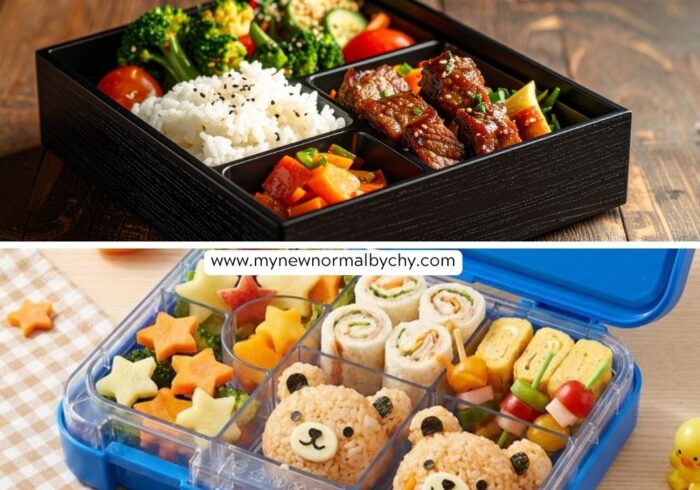
What Is a Bento Box?
A bento is a Japanese style of single-serving packed meal. Traditionally, a bento may contain rice alongside fish or meat, vegetables, pickled foods and other accompaniments arranged within a divided container.
Modern bento-style lunch boxes have taken that basic idea and adapted it for all kinds of meals. Many of the versions used for children’s school lunches contain several compartments that allow parents to pack different foods in one container while keeping them reasonably separated.
For example, you could fill one compartment with a turkey wrap, another with strawberries, another with cucumber slices and another with cheese.
This makes bento boxes particularly convenient for children who enjoy having several small foods rather than one large main dish.
Recommendations for you
Easy Healthy Sweet Breakfast Ideas You’ll Actually Look Forward to Eating
15 Easy All-Day Crockpot Recipes For Busy Moms
Best First Foods For Babies Starting Solids
Fastest One-Pan Quick Meals That Save Time & Reduce Cleanup
Quick Sourdough Discard Breakfast Recipes For Busy Moms
Creamy Mango Dessert recipes That Taste Better Than Bakery Treats
What Does “Bento” Literally Mean?
The word “bento” refers to a Japanese packed or boxed meal, generally prepared as a single portion to be eaten away from home or at another time.
So while people outside Japan often use “bento box” to describe the compartmentalised container itself, bento traditionally refers to the prepared meal rather than simply the box.
Modern school-lunch culture has broadened the term considerably. Today, you’ll frequently see “bento box” used to describe reusable lunch containers divided into multiple sections.
What Is the Point of a Bento Box?
The main appeal is organisation, variety and portioning.
Rather than packing several individual containers or plastic bags, you can place different parts of the meal into one organised container. Separate compartments can also make it easier to include several food groups in a single lunch.
For children’s lunches in particular, bento boxes offer several practical advantages:
- They encourage variety by providing space for several different foods.
- Separate compartments can help prevent foods from mixing together.
- Small portions may appear less overwhelming to younger children.
- They can reduce the number of disposable bags and individually packaged snacks you use.
- The compartments provide an easy visual framework for planning balanced lunches.
- They work particularly well for children who prefer snack-style lunches.
A bento box doesn’t automatically make a lunch healthier, of course. That depends entirely on what you put inside it. Its real benefit is that the format makes it relatively easy to build variety into a packed lunch.
What Is the Difference Between a Bento Box and a Lunch Box?
The biggest difference is usually how the inside of the container is organised.
A conventional lunch box may have one large compartment where you place sandwiches, packaged snacks, fruit and smaller containers. A modern bento box generally has several built-in compartments designed to separate different foods.
Think of a traditional lunch box as one container that holds your lunch, whereas a bento-style box often acts as several small food containers combined into one.
There is plenty of overlap, though. Some modern lunch boxes include removable dividers and trays, effectively giving them the same functionality as bento boxes.
For school lunches, neither is inherently better. The best option is the one your child can comfortably open, close, carry and eat from independently.
What Should You Put in a Child’s Bento Box?
You don’t need complicated recipes to make a good bento lunch.
A simple formula can make planning much easier:
Main food + fruit + vegetable + protein/dairy food + small extra
For example:
Turkey wrap + strawberries + cucumber + cheese cubes + crackers
Or:
Pasta + blueberries + carrots + boiled egg + yoghurt
You don’t have to fill every compartment simply because it is there. Consider your child’s age, appetite and usual eating habits rather than creating an unnecessarily large lunch.
Now for the fun part—what do we actually put inside?
25 Easy Bento Box Lunch Ideas for School
1. Turkey and Cheese Pinwheel Bento
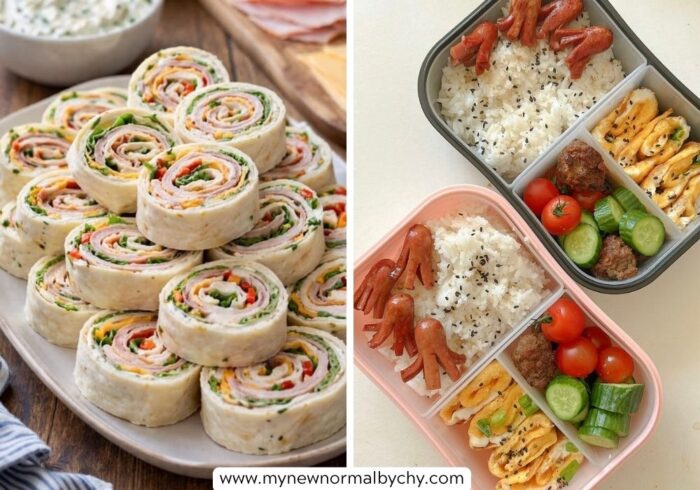
Spread a tortilla with a thin layer of cream cheese, add sliced turkey and cheese, roll it tightly and cut it into bite-sized pinwheels.
Pair the pinwheels with cucumber rounds, strawberries and whole-grain crackers for a colourful lunch that is easy for little hands to manage.
This is also a useful alternative for children who regularly bring sandwiches home uneaten. The ingredients are familiar, but changing the presentation can make lunchtime more interesting.
Pack with: Turkey and cheese pinwheels, cucumber, strawberries and crackers.
2. Mini Sandwich and Fruit Bento
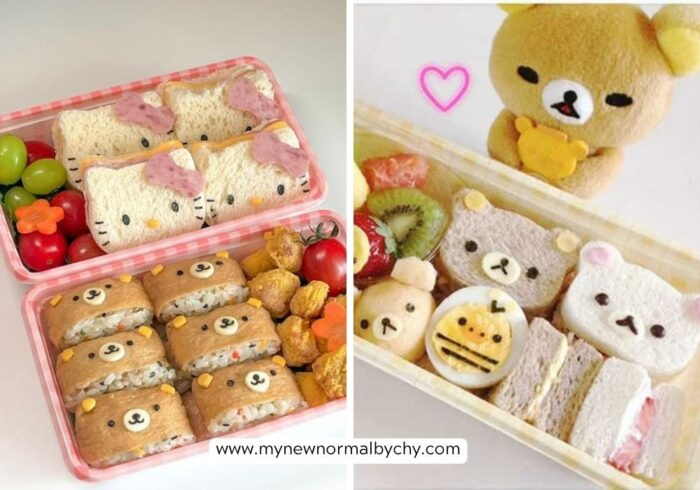
There’s nothing wrong with a sandwich, it doesn’t have to disappear simply because you’re using a bento box.
Make your child’s favourite sandwich and cut it into smaller squares, triangles or strips. Add grapes cut appropriately for your child’s age, carrot sticks, cheese cubes and a small portion of pretzels.
Using smaller sandwich portions also leaves more room for variety.
Pack with: Mini sandwiches, grapes, carrots, cheese and pretzels.
3. Chicken and Rice Bento
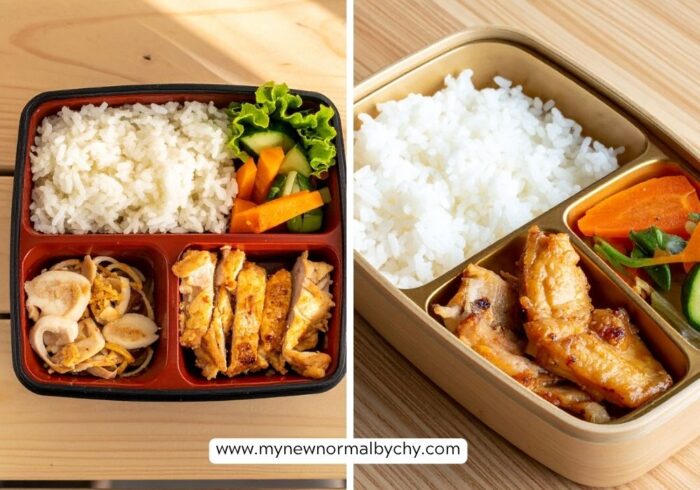
Use leftover roasted or grilled chicken to create an easy lunch for the following day.
Pair bite-sized chicken pieces with rice, steamed vegetables and fruit. If your child prefers the meal warm, pack the heated chicken and rice in an appropriate insulated food container rather than a cold bento box.
Pack with: Chicken, rice, broccoli and orange segments.
4. DIY Pizza Bento
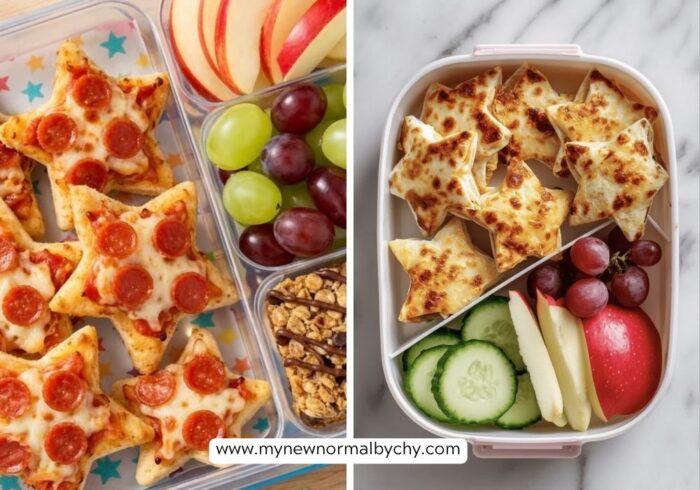
Instead of packing prepared pizza, let your child assemble miniature pizzas at lunchtime.
Pack mini pita rounds or flatbread alongside shredded mozzarella, sliced vegetables and a small leak-resistant container of tomato sauce.
For younger children, you can assemble the mini pizzas beforehand.
Pack with: Mini pita, mozzarella, tomato sauce, sweet pepper strips and melon.
5. Pasta Salad Bento
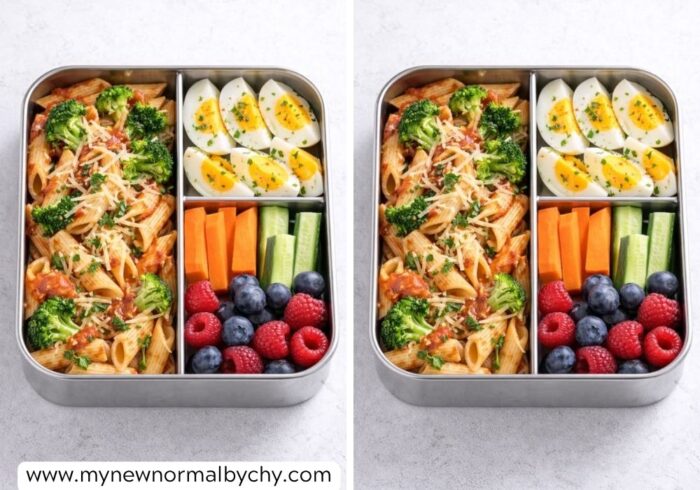
Cold pasta makes a practical school lunch because it can be prepared the evening before.
Combine cooked pasta with ingredients your child already enjoys, such as sweetcorn, cucumber, cherry tomatoes prepared appropriately for their age, cheese or cooked chicken. Keep the dressing simple and avoid making the pasta overly wet.
Pack with: Pasta salad, berries, cucumber and cheese.
6. Egg and Crackers Bento
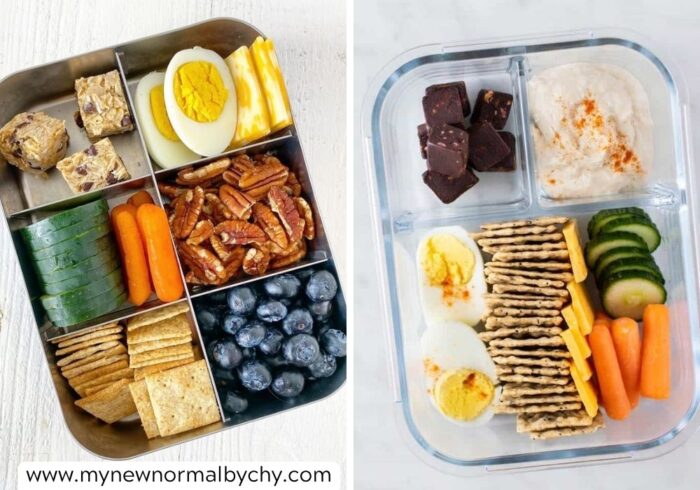
A hard-boiled egg can turn a simple snack-style lunch into something more substantial.
Serve it with whole-grain crackers, cheese, cucumber and fruit. Peel the egg at home for younger children so they don’t have to struggle with the shell at school.
Pack with: Hard-boiled egg, crackers, cheese, cucumber and blueberries.
7. Chicken Wrap Bento
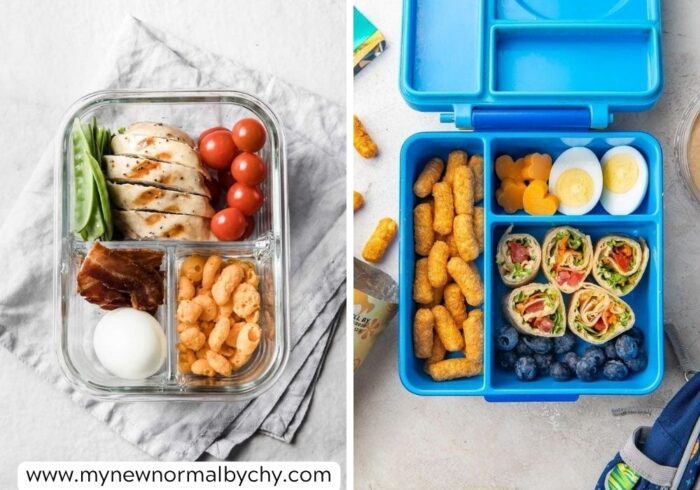
Fill a soft tortilla with cooked chicken, lettuce and a small amount of cheese or another filling your child enjoys.
Roll tightly and slice into manageable pieces. Pair it with fruit and crunchy vegetables for a straightforward school lunch.
Pack with: Chicken wrap, apple slices, carrots and yoghurt.
8. Hummus and Pita Bento
For a meat-free option, make hummus the centre of the lunch.
Add pita triangles, cucumber, sweet pepper strips and another vegetable suitable for dipping. Fruit or cheese can fill the remaining compartment.
A leak-resistant section or small sealed pot is important when packing dips.
Pack with: Hummus, pita, cucumber, peppers and strawberries.
9. Breakfast-for-Lunch Bento
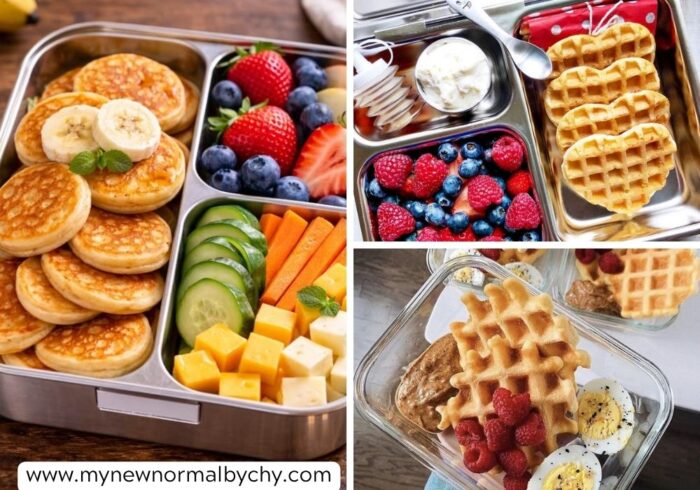
Breakfast foods can make surprisingly convenient school lunches.
Mini pancakes or waffles can be served cold alongside yoghurt, berries and sliced banana. Choose pancakes that aren’t heavily coated in syrup so the lunch remains easy to handle.
Pack with: Mini pancakes, yoghurt, strawberries and banana.
10. Cheese and Crackers Lunchable-Style Bento
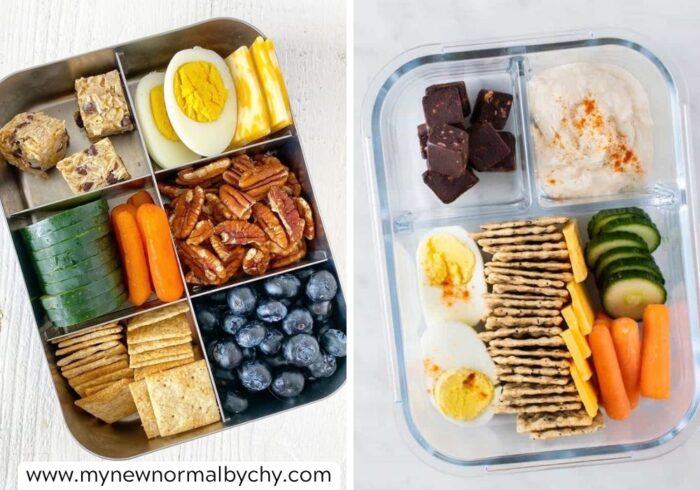
Create a homemade version of the popular snack-style lunch.
Pack whole-grain crackers with sliced cheese and cooked chicken or turkey so your child can build little cracker sandwiches. Add fresh fruit and vegetables alongside them.
Pack with: Crackers, cheese, turkey, grapes and cucumber.
Recommendations for you
Best Educational Toys For Toddlers & Preschoolers: A Parent’s Guide To Learning Through Play
Baby Nursery Closet Organisation Ideas For Small Spaces
Screen-Free Summer Activities For Busy Toddlers
The Best Sensory Play Ideas For Rainy Days
11. Mini Meatball Bento
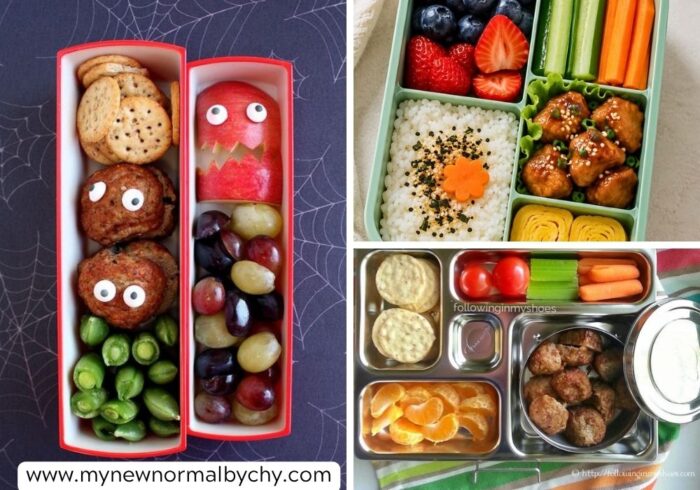
Leftover meatballs can easily become tomorrow’s school lunch.
Serve small meatballs with pasta or bread, vegetables and fruit. Depending on your child’s preference and the school’s facilities, they can be packed cold or kept warm in an insulated container.
Pack with: Mini meatballs, pasta, peas and berries.
12. Peanut Butter and Banana Roll-Up Bento
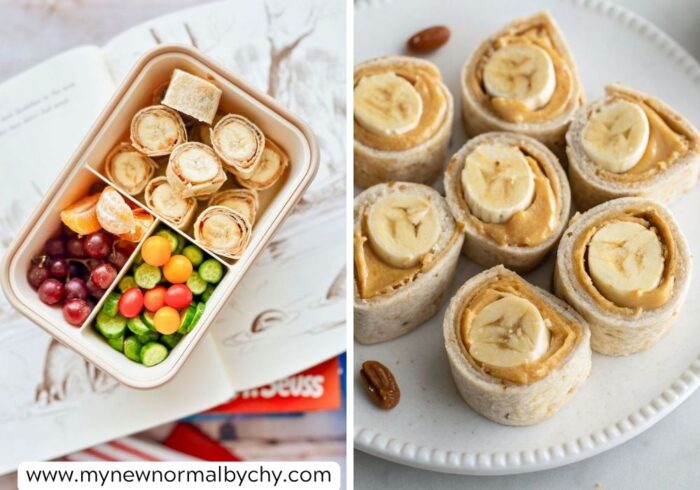
Spread a tortilla with peanut butter, add banana, roll and slice.
However, check your school’s allergy policy first. Many schools prohibit peanuts or tree nuts because of severe allergies. Where necessary, use a school-approved alternative such as sunflower seed butter.
Pack with: Banana roll-ups, strawberries, cucumber and crackers.
13. Quesadilla Bento
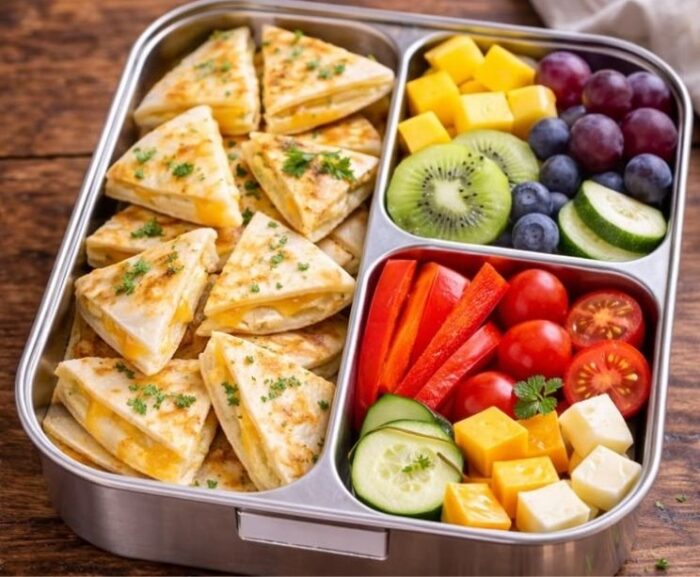
Cheese quesadillas are quick to prepare and usually hold up well in a packed lunch.
Cook until the cheese melts, allow the quesadilla to cool and slice it into wedges. Add mild salsa or another dip if your child enjoys it.
Pack with: Cheese quesadilla wedges, sweetcorn, avocado prepared safely, and berries.
14. Mac and Cheese Bento
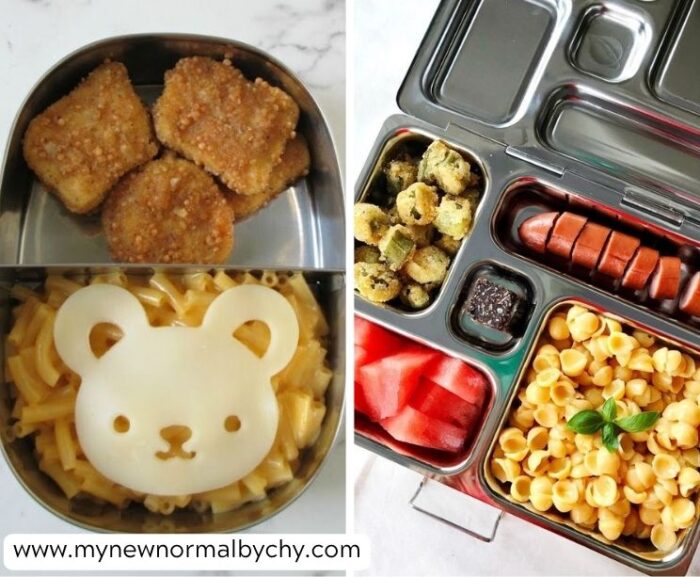
If your child prefers warm lunches, leftover macaroni and cheese can provide a welcome change from sandwiches.
Heat it thoroughly in the morning and transfer it to a preheated insulated food jar designed to keep hot foods hot. Pack fruit and vegetables separately.
Pack with: Macaroni and cheese, peas, strawberries and cucumber.
15. Mini Bagel Bento
Mini bagels are conveniently sized for bento compartments.
Fill one with cream cheese, turkey, cheese or another favourite filling. You can also pack the filling separately and let older children assemble it themselves.
Pack with: Mini bagel, cream cheese, blueberries, carrots and cheese.
16. Chicken Pasta Bento
Combine cooked pasta with small pieces of grilled chicken and vegetables for a more substantial lunch.
A light dressing or small amount of pesto can add flavour, provided your child likes it and the ingredients comply with the school’s allergy rules.
Pack with: Chicken pasta, cucumber, melon and yoghurt.
17. Mini Muffin Bento
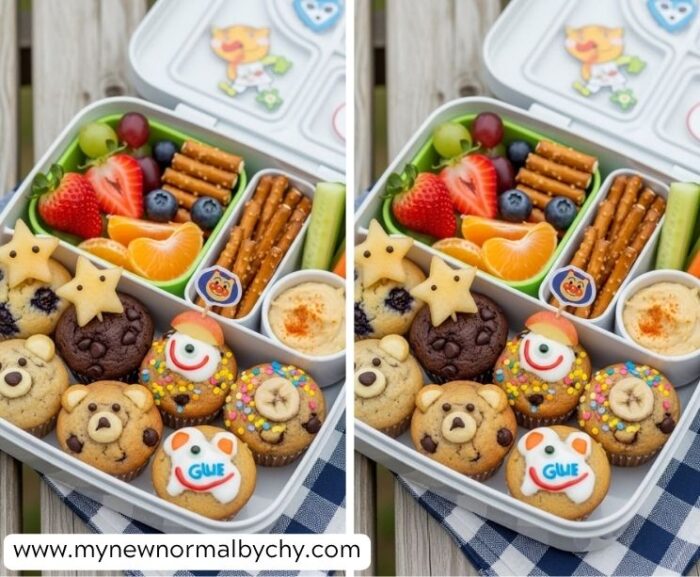
Savoury muffins can be made ahead and frozen, making them especially useful on busy school mornings.
Try cheese and sweetcorn, vegetable and cheese, or egg-based muffins. Defrost the required portion overnight and pair it with fresh sides.
Pack with: Savoury mini muffins, cheese, cucumber and berries.
18. Tuna Sandwich Bento
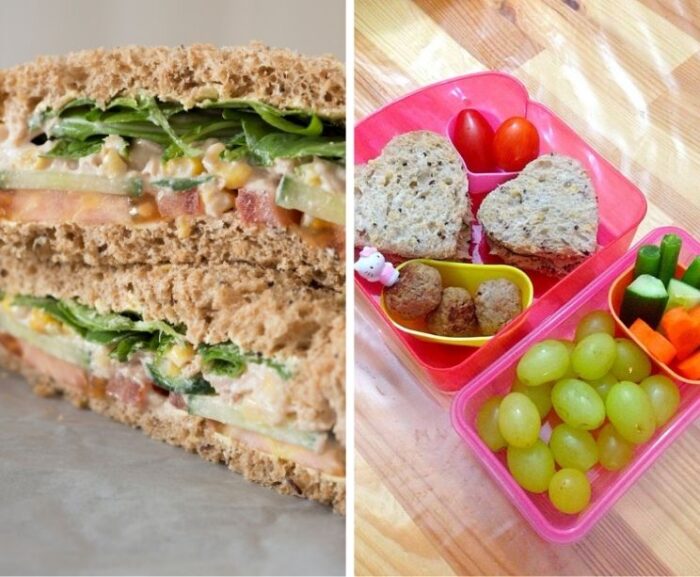
If your child’s school permits fish and your child enjoys it, a simple tuna sandwich can provide another option for your rotation.
Keep the filling relatively dry so the bread doesn’t become soggy and ensure the lunch remains properly chilled until it is eaten.
Pack with: Tuna sandwich quarters, carrots, grapes and crackers.
19. Veggie and Cheese Bento
Not every school lunch needs meat.
Combine cheese cubes with whole-grain crackers, hummus and a selection of colourful vegetables. Include fruit to add natural sweetness.
Pack with: Cheese, crackers, hummus, carrots, cucumber and berries.
20. French Toast Finger Bento
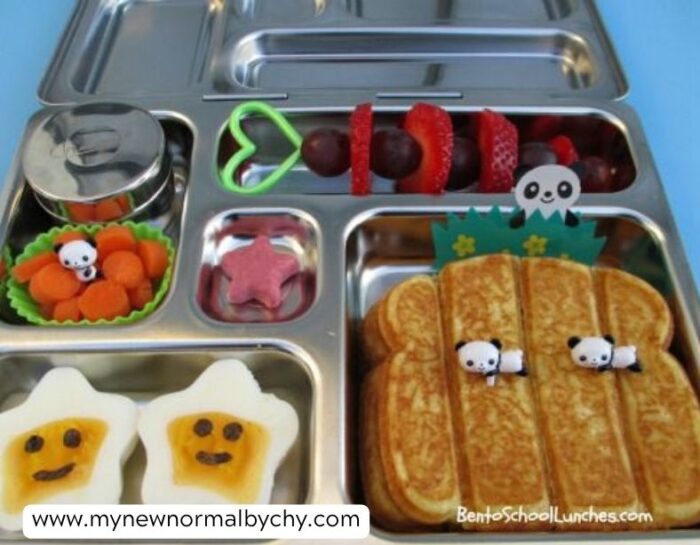
Cut cooked French toast into strips to create an easy finger-food lunch.
Allow it to cool before packing and serve it with fruit and yoghurt rather than covering it in syrup.
Pack with: French toast fingers, yoghurt, blueberries and banana.
21. Mini Burger Bento
Small homemade burgers can fit neatly into larger bento compartments.
Use a small bun with a cooked meat or vegetarian patty and simple toppings your child enjoys. Keep sauces light to prevent sogginess.
Pack with: Mini burger, cucumber, strawberries and baked potato wedges.
22. Rainbow Fruit and Sandwich Bento
Use naturally colourful foods to create an appealing lunch without needing elaborate food art.
A simple sandwich can be paired with strawberries, orange segments, blueberries, cucumber and other produce your child enjoys.
The variety of colours makes the lunch visually interesting while introducing several different fruits and vegetables.
Pack with: Sandwich quarters and a colourful selection of fruit and vegetables.
23. Leftover Roast Chicken Bento
School lunch doesn’t always require a separate recipe.
Slice leftover roast chicken from dinner and pair it with bread or crackers, cheese, fruit and vegetables. Repurposing suitable leftovers can reduce both morning preparation and food waste.
Pack with: Roast chicken, crackers, cheese, carrots and apple slices.
24. Picky-Eater Favourite Foods Bento
Sometimes the most useful lunch is the least complicated one.
Rather than suddenly filling a bento box with unfamiliar foods, start with several foods your child already reliably eats. You can occasionally include a small amount of something less familiar alongside them without making it the centre of the meal.
For example, a selective eater’s box might contain plain crackers, cheese, strawberries, cucumber and a simple turkey roll.
A successful school lunch isn’t the one that photographs best. It’s the one that is practical, nourishing and actually gets eaten.
25. Chicken Nugget Bento
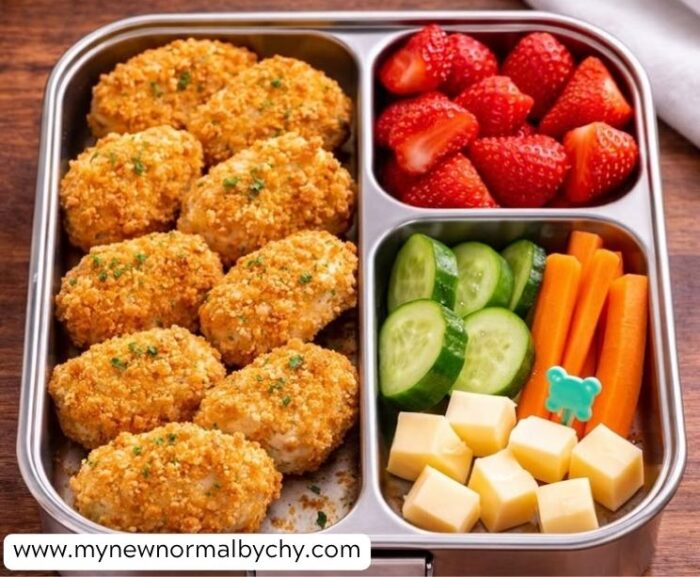
Chicken nuggets can be useful on days when convenience matters.
Cook them thoroughly, allow them to cool appropriately before packing for a cold lunch, and combine them with fresh sides rather than making the entire lunch convenience-based.
Pack with: Chicken nuggets, sweetcorn, cucumber, grapes and crackers.
How to Build a Balanced Bento Box for School
Instead of trying to make every lunch look Pinterest-perfect, focus on variety across the week.
Where practical, include a starchy carbohydrate, a protein source, some fruit or vegetables, and another food such as yoghurt or cheese. What is appropriate will vary depending on your child’s age, appetite, dietary needs and school-day routine.
Water is generally the simplest drink to send alongside lunch unless your child’s school or dietary requirements suggest otherwise.
And remember: children’s appetites fluctuate. A lunch box coming home with food remaining doesn’t necessarily mean you packed the “wrong” meal. Pay attention to which foods consistently return untouched and adjust portions accordingly.
Bento Box Ideas for Picky Eaters
Bento boxes can work particularly well for selective eaters because you don’t need to build the entire lunch around one large meal.
Start with what your child already accepts.
If crackers, cheese, strawberries and plain chicken are reliable foods, those can form the foundation of the lunch. A small amount of another food can then be included separately.
The divided compartments are useful here because an unfamiliar food doesn’t necessarily have to touch a preferred one.
Avoid turning the lunch into a daily test of whether your child will eat something new. School lunchtime is usually limited, social and busy. Familiar, manageable foods can make far more sense than complicated meals that require encouragement to eat.
How to Keep a Bento Box Lunch Fresh Until Lunchtime
Food safety matters just as much as presentation.
Perishable foods such as meat, eggs, dairy products and certain prepared dishes need to remain at a safe temperature. Use an insulated lunch bag with sufficient frozen ice packs for foods that need to stay cold, and follow the food-safety guidance applicable where you live.
For hot lunches, use a food-grade insulated container intended for hot food. Preheating the container with hot water before adding thoroughly heated food can help it retain heat longer; follow the manufacturer’s directions.
Also teach children to throw away perishable leftovers that have spent too long outside safe temperature control rather than eating them later in the day.
Recommendations for you
Common Baby Feeding Mistakes New Parents Make & How To Fix Them
How To Encourage Healthy Eating Habits In Children
Gentle Parenting Strategies For Handling Toddler Tantrums
How To Soothe A Colicky Baby Naturally
The Best Way to Stop Toddler Tantrums In Public
How to Stop Bento Lunches From Getting Soggy
Moisture is usually the culprit.
Allow cooked food to cool appropriately before closing the container, dry washed fruit and vegetables thoroughly, and keep wet ingredients or sauces away from bread and crackers.
Use leak-resistant compartments or small containers for yoghurt, dips and dressings.
For sandwiches, placing relatively dry ingredients next to the bread and wetter ingredients towards the centre can help preserve the texture.
How to Make School Bento Lunches Easier During Busy Mornings
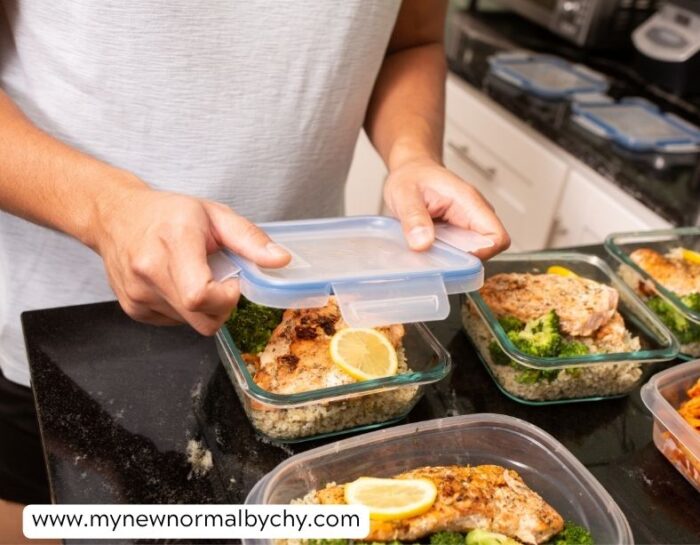
Bento lunches are far easier to maintain when they don’t require 45 minutes of preparation every morning. The most practical approach is to prepare several components in batches ahead of time, so that packing a school lunch takes no more than five to ten minutes.
Choose one day of the week for your main meal prep. While preparing other meals, hard-boil a batch of eggs, roast vegetables, portion dry snacks into small containers, prepare fruit and bake a batch of mini muffins. Store everything separately in clearly labelled containers in the refrigerator so that, on busy school mornings, you can simply choose a few prepared ingredients and assemble the bento box.
A smaller midweek preparation session can also be helpful. Foods such as quesadillas, cooked chicken or meatballs can be prepared in another batch when the first round of ingredients begins to run low. This provides enough variety to get through the remainder of the school week without having to start from scratch each morning.
Make good use of your freezer, too. Pancakes, waffles, muffins, meatballs and other freezer-friendly lunch components can be prepared in larger quantities and frozen in individual portions. Depending on the food and how it will be served, portions can then be thawed safely in advance or reheated before packing.
Keeping a small rotation of prepared foods in both the refrigerator and freezer also gives you a useful backup for particularly hectic mornings. Instead of thinking, “What am I going to make for lunch today?”, you simply choose a main item, add fruit or vegetables, include one or two sides, and pack everything into the bento box.
The goal isn’t to prepare elaborate lunches in advance. It’s to do the time-consuming work once and make everyday school-lunch assembly as quick and straightforward as possible.
Food Safety and Allergies
A few practical things worth knowing before you start packing:
Perishable items like meat, cheese, and eggs need to stay below 40°F (about 4°C) until lunchtime, which usually means at least one ice pack, and two if the lunch bag isn’t insulated well or the weather’s warm. Food safety guidelines generally recommend that perishable food not sit at room temperature for more than two hours.
If your child’s school has a nut-free policy, double-check any pre-made granola bars, trail mixes, or nut butters before packing them, cross-contamination labeling (“may contain traces of”) matters at schools with severe allergy policies, even if the product itself doesn’t list nuts as an ingredient.
For younger kids, cut round foods like grapes, cherry tomatoes, and hot dogs into halves or quarters lengthwise rather than rounds, since round, coin-shaped pieces are a known choking hazard for children under four (and honestly, it’s a good habit through early elementary school too).
Frequently Asked Questions About Bento Box Lunches
Are bento boxes good for school lunches?
They can be excellent for school because the compartments allow several foods to be packed neatly in one container. Look for a model that is durable, easy for your child to open independently and appropriate for the amount they typically eat.
Are bento boxes only for Japanese food?
No. Bento has Japanese origins, but modern compartmentalised boxes can be used for practically any type of packed meal. Sandwiches, wraps, pasta, fruit, vegetables and many other familiar school-lunch foods can all be packed bento-style.
Do bento boxes keep food cold?
Not necessarily. A bento box is primarily a container. Unless a particular model has temperature-control features, foods that require refrigeration should usually be placed inside an insulated lunch bag with suitable ice packs.
Can you put hot food in a bento box?
Only if the manufacturer states that the particular container is designed for it. If food needs to remain hot until lunchtime, a proper insulated food jar is generally more appropriate than a standard plastic bento box.
What foods should not go in a bento box?
Avoid foods that cannot be kept safely at the required temperature, extremely runny foods in compartments that aren’t leakproof, and foods prohibited under your child’s school allergy policy. Also consider whether a particular food presents an age-related choking risk.
How many compartments should a children’s bento box have?
There is no perfect number. Three to five compartments are often convenient because they provide variety without encouraging parents to pack more food than their child needs. The overall capacity matters more than the number of sections.
What can I put in a bento box instead of sandwiches?
Try pasta, wraps, quesadillas, mini bagels, rice dishes, chicken, savoury muffins, crackers with cheese, pita with hummus, leftovers or breakfast-style foods such as mini pancakes.
Can I prepare bento boxes the night before?
Many components can be prepared ahead, although some foods are best assembled in the morning to maintain their texture. Refrigerate perishable ingredients promptly and follow appropriate food-storage guidance.
Are bento boxes good for picky eaters?
They can be. Separate compartments allow several familiar foods to be offered without mixing them together, and the small portions may be more approachable for some children. However, the box itself won’t resolve selective eating, so expectations should remain realistic.
What is the easiest bento lunch for beginners?
Start with foods you’re already packing. A sandwich cut into smaller pieces, cheese, fruit, cucumber and crackers is already a perfectly good bento-style lunch. You don’t need special recipes or elaborate food shapes.
Final Thoughts on Easy Bento Box Lunch Ideas for School
Bento lunches don’t need to involve perfectly arranged fruit, elaborate sandwich shapes or an extra hour of preparation every morning. At their most practical, they’re simply a convenient way to pack several foods into one organised container.
Use these 25 easy bento box lunch ideas for school as inspiration rather than a rigid meal plan. Adapt the portions and ingredients to your child’s age, preferences, dietary requirements and school policies, and keep a few dependable favourites in regular rotation.
Some days that might mean homemade chicken pinwheels with fresh berries. Other days, it might simply be crackers, cheese, fruit and last night’s chicken—and that is perfectly fine.
The goal is a school lunch that is safe, varied, manageable to prepare and appealing enough to come home mostly eaten.
Leave a Reply