Baby Nursery Closet Organization Ideas for Small Spaces.
Welcoming a baby into your home is exciting, but it also comes with a surprising amount of stuff. Tiny clothes, diapers, blankets, swaddles, shoes, toys, feeding supplies, and seasonal outfits can quickly take over a small nursery.
If you’re working with a limited closet, or no dedicated nursery at all, you may feel like you’re constantly battling clutter. The good news is that you don’t need a huge walk-in closet to keep your baby’s belongings organized. With a few smart storage solutions and creative organization ideas, even the smallest nursery closet can become functional and efficient.
In this guide, you’ll discover practical baby nursery closet organization ideas for small spaces that maximize every inch while making your daily routine easier.
Why Nursery Closet Organization Matters
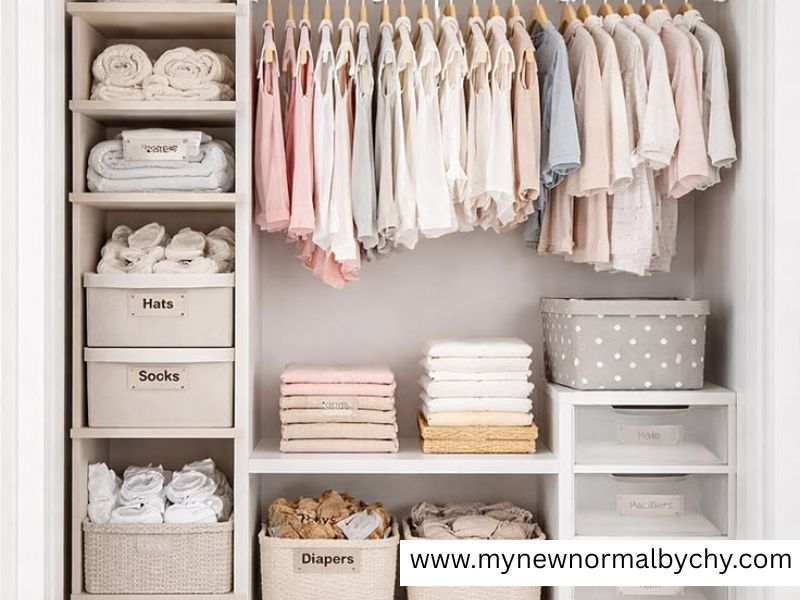
When you’re caring for a newborn or toddler, every minute counts. Searching for a clean onesie during a diaper emergency or digging through piles of clothes while holding a crying baby isn’t exactly ideal.
A well-organized nursery closet can help you:
- Save time during busy mornings
- Find baby essentials quickly
- Prevent clothing from getting lost
- Keep the nursery looking tidy
- Maximize limited storage space
- Reduce stress and overwhelm
Busy parents often find that an organized nursery makes everyday baby care much smoother. If you’re looking for more practical parenting tips, be sure to check out our Ultimate Baby and Toddler Care Guide for Busy Parents.
Check out our:
Signs Your Toddler Is Ready for Potty Training
How To Reset A Toddler’s Sleep Schedule
How to Prepare Toddlers for Their First Day of School
Common Nursery Closet Challenges in Small Spaces
Before organizing your baby’s closet, it’s helpful to identify the biggest challenges.
Many parents struggle with:
- Limited hanging space
- Too many baby clothes in multiple sizes
- Lack of shelving
- Seasonal clothing storage
- Diaper and wipe organization
- Toy overflow
- Baby gear taking up closet space
Fortunately, most of these problems can be solved with thoughtful storage solutions.
Baby Nursery Closet Organization Ideas for Small Spaces
1. Use Closet Dividers to Separate Clothing Sizes
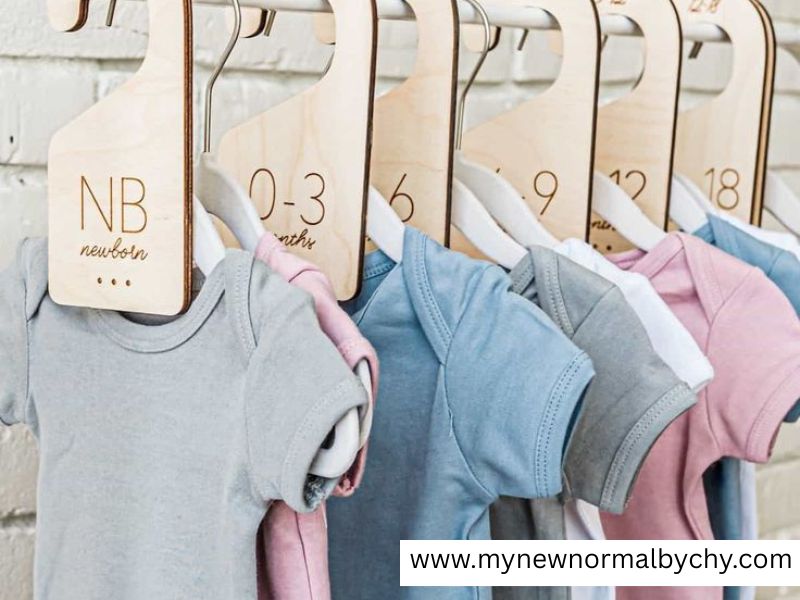
Babies grow incredibly fast.
One week they’re wearing newborn outfits, and before you know it, they’ve moved into the next size.
Closet dividers help keep clothing organized by age and size categories such as:
- Newborn
- 0–3 Months
- 3–6 Months
- 6–9 Months
- 9–12 Months
This system prevents you from forgetting about clothes hidden in the back of the closet.
It also makes it easier to rotate outfits as your baby grows.
2. Double Your Hanging Space with a Second Rod
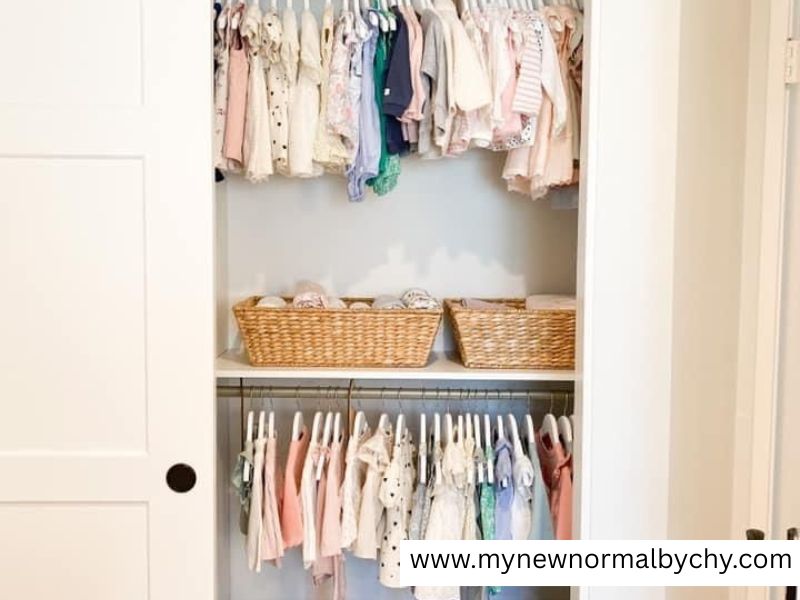
Most nursery closets waste valuable vertical space.
Installing a second hanging rod instantly creates additional storage.
Use the upper rod for:
- Future clothing sizes
- Special occasion outfits
- Seasonal items
Use the lower rod for:
- Everyday clothing
- Frequently used outfits
- Jackets and sweaters
This simple upgrade can nearly double your closet capacity.
3. Add Storage Bins on Upper Shelves
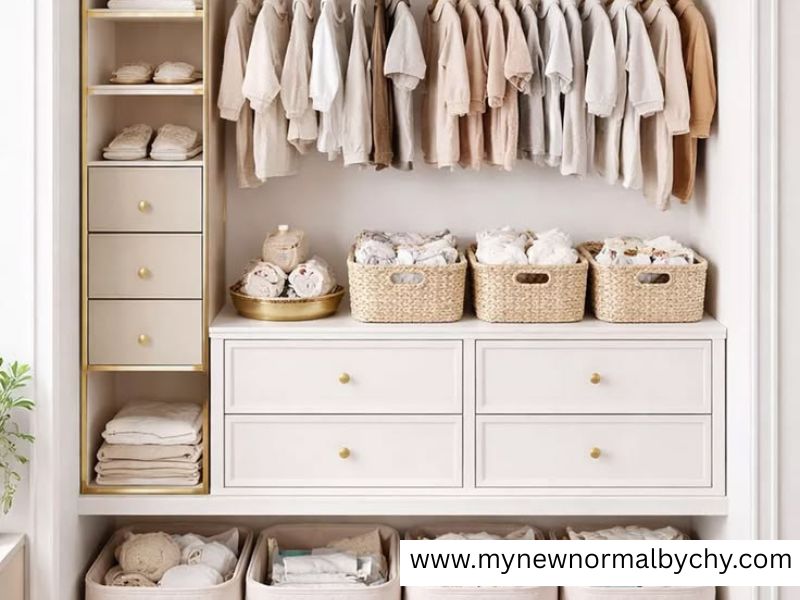
The top shelf is often one of the most underutilized spaces in a nursery closet.
Use labeled bins to store:
- Extra diapers
- Baby blankets
- Swaddles
- Burp cloths
- Seasonal accessories
- Keepsake items
Choose matching bins for a clean, cohesive look.
Clear bins are especially useful because you can see what’s inside without opening every container.
4. Use Drawer Organizers for Tiny Baby Items
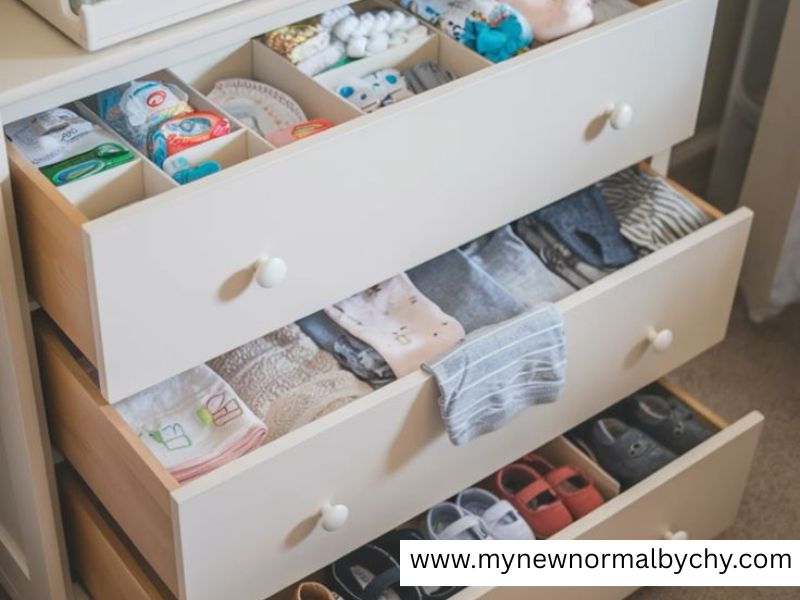
Small baby essentials tend to disappear quickly.
Drawer organizers help keep items separated and easy to find.
Store items such as:
- Socks
- Mittens
- Bibs
- Pacifiers
- Hair accessories
- Washcloths
Instead of tossing everything into one drawer, create designated sections for each category.
5. Install Floating Shelves Inside the Closet
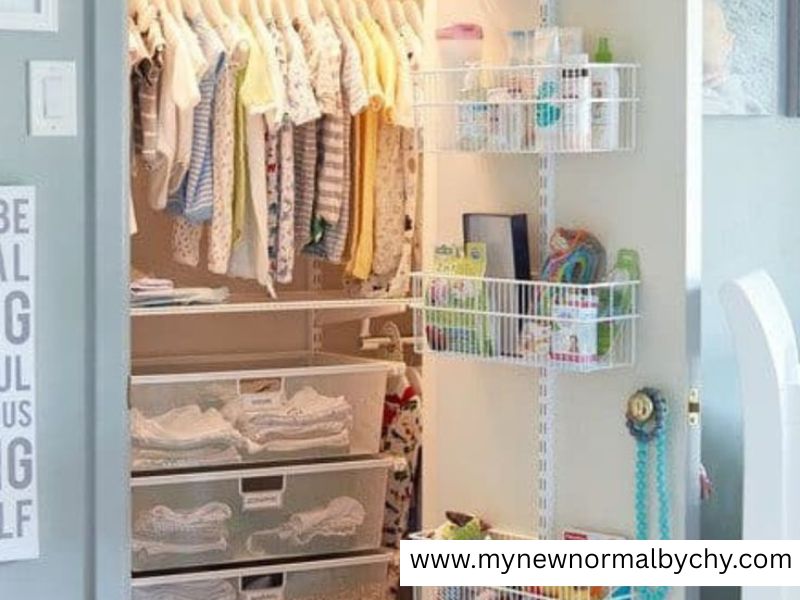
If your nursery closet lacks shelving, floating shelves can create valuable storage space.
Shelves are perfect for storing:
- Folded clothes
- Books
- Diapers
- Wipe containers
- Baskets
- Nursery decor
Vertical storage is one of the best solutions for small nurseries because it utilizes wall space without taking up additional floor space.
6. Store Diapers in Easy-to-Reach Baskets
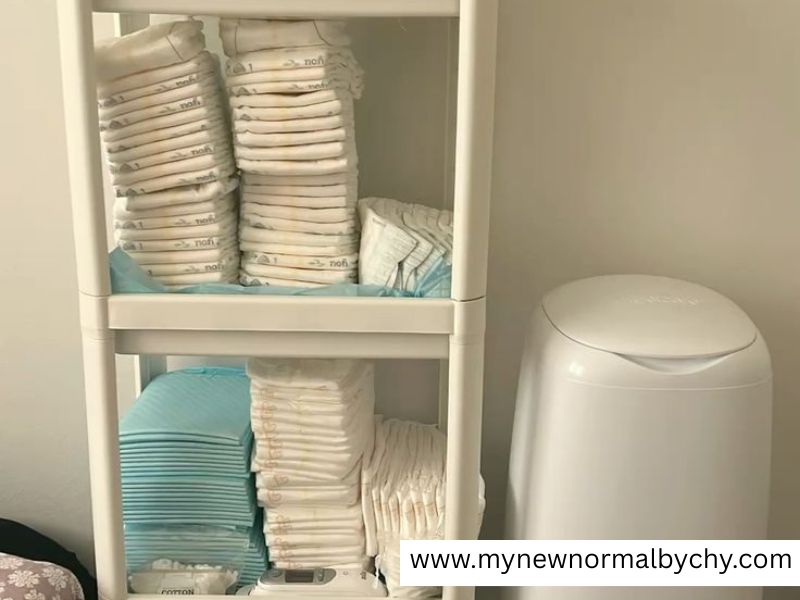
Diapers are among the most frequently used baby items.
Keeping them accessible can save valuable time during diaper changes.
Place diaper baskets:
- On a lower shelf
- Inside a cube organizer
- Near the changing station
You may even want separate baskets for:
- Newborn diapers
- Larger sizes
- Overnight diapers
- Swim diapers
Organization becomes much easier when everything has a designated home.
7. Utilize Over-the-Door Organizers
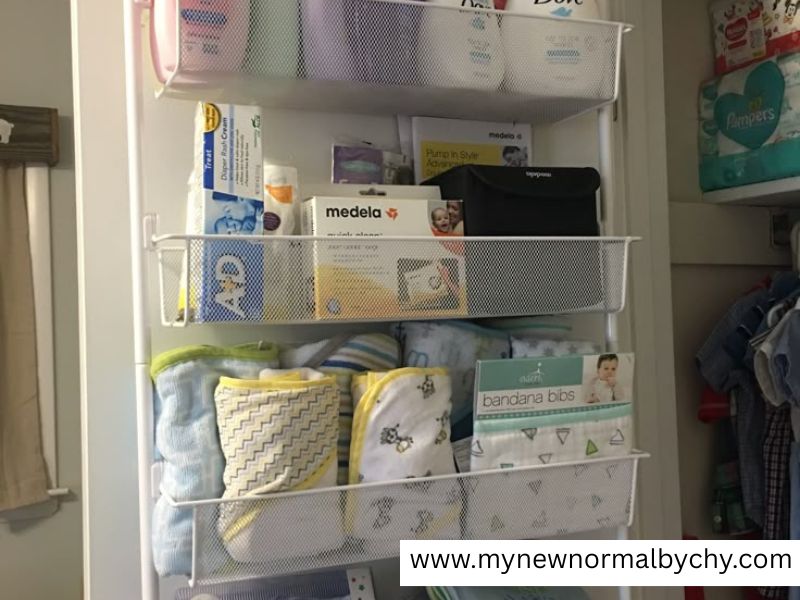
Closet doors offer valuable storage opportunities.
An over-the-door organizer can hold:
- Shoes
- Diaper creams
- Bath products
- Toys
- Accessories
- Feeding supplies
This solution is particularly useful in apartments and small homes where every square inch matters.
8. Create a “Current Size” Zone
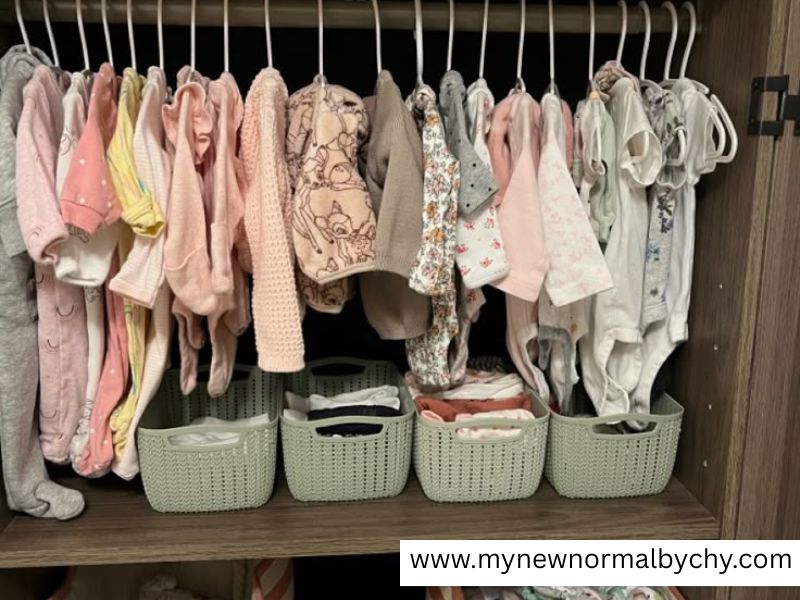
One of the best nursery organization hacks is creating a dedicated section for your baby’s current clothing size.
Keep frequently used items together, including:
- Onesies
- Sleepers
- Pants
- Pajamas
- Socks
Having a grab-and-go area makes dressing your baby much faster.
Everything else can be stored separately until needed.
Check out our:
How to Prepare Your Toddler for a New Baby: Everything You Need to Know
30 Fun Screen-Free Summer Activities for Busy Toddlers
The Ultimate Baby And Toddler Care Guide: Everything You Need To Know From Birth To Age 3
9. Use Matching Hangers
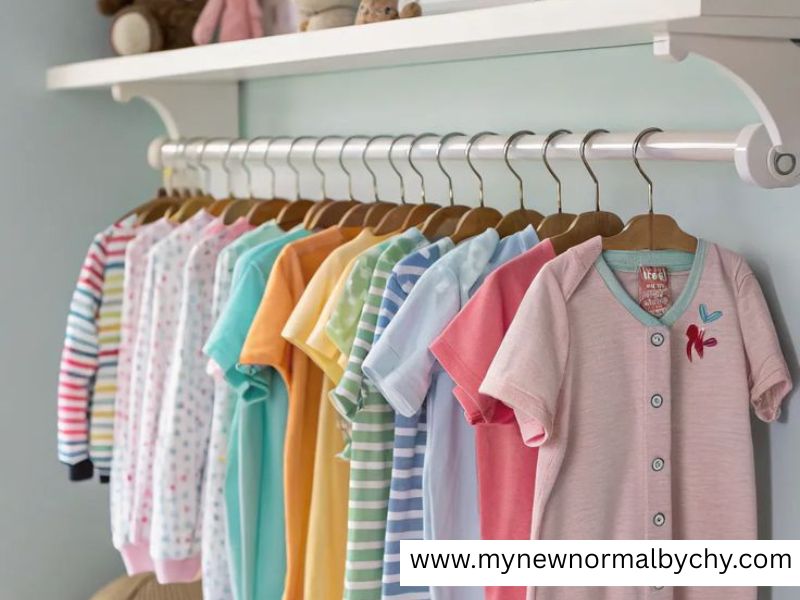
It might seem like a small detail, but matching baby hangers make a significant difference.
They:
- Save space
- Create a cleaner appearance
- Prevent clothing from slipping
- Improve closet organization
Slim velvet hangers are especially useful in small closets because they take up less room than bulky plastic hangers.
10. Add a Cube Storage Organizer
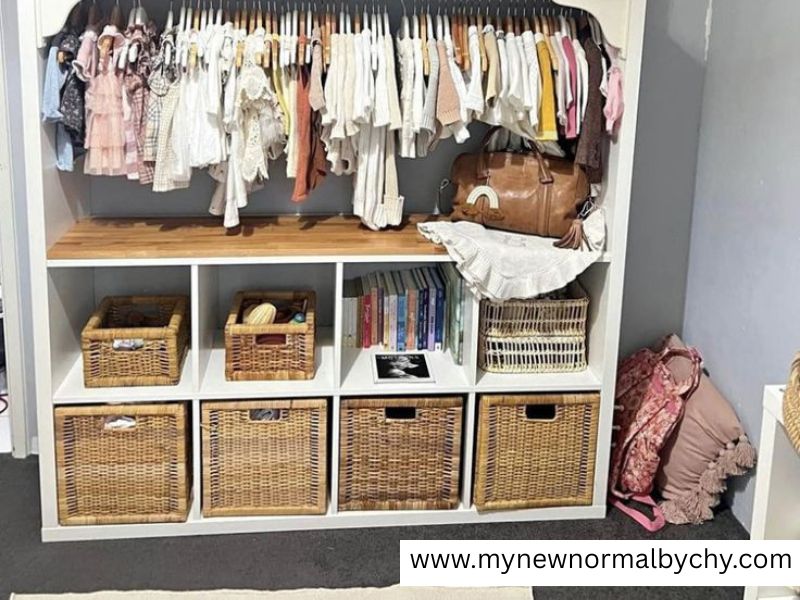
Cube organizers are incredibly versatile for nursery storage.
You can use fabric bins inside each cube to organize:
- Toys
- Books
- Diapers
- Extra clothing
- Baby blankets
This system keeps everything contained while still remaining accessible.
11. Rotate Seasonal Clothing
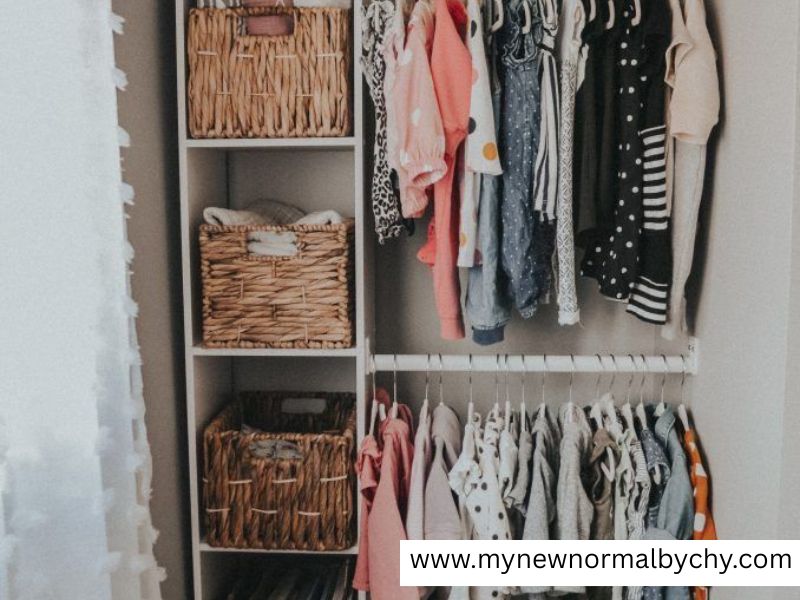
One major source of closet clutter is storing every season’s clothing together.
Instead:
Keep Accessible:
- Current season clothing
- Current size outfits
Store Elsewhere:
- Future sizes
- Winter jackets
- Summer swimwear
- Holiday outfits
Vacuum-sealed bags can help reduce the amount of storage space needed.
12. Label Everything
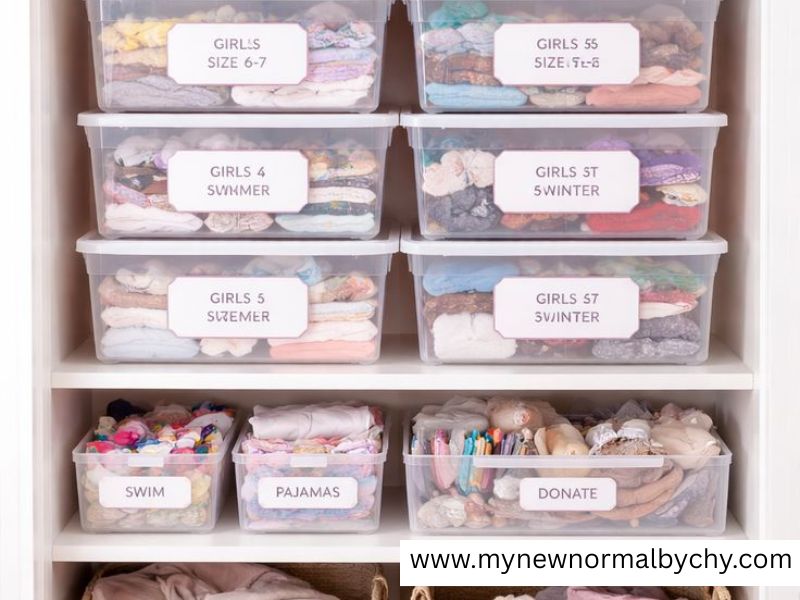
Labels eliminate guesswork.
Use labels on:
- Bins
- Drawers
- Shelves
- Storage baskets
This becomes especially helpful when grandparents, babysitters, or your partner need to find something quickly.
Simple labels help everyone maintain the organization system.
13. Use Under-Crib Storage
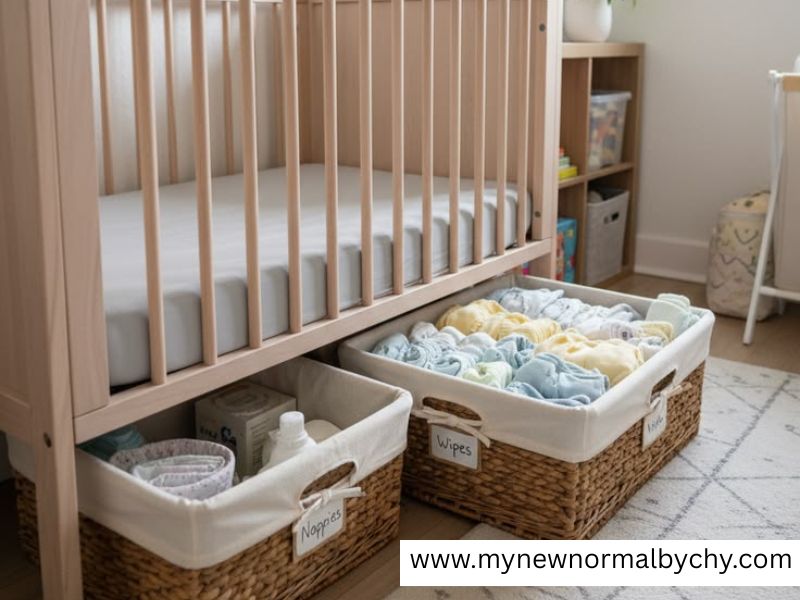
If closet space is extremely limited, look beyond the closet.
Under-crib storage bins are ideal for:
- Extra diapers
- Seasonal clothing
- Spare bedding
- Baby keepsakes
This hidden storage area can free up valuable closet space.
14. Create a Memory Box Section
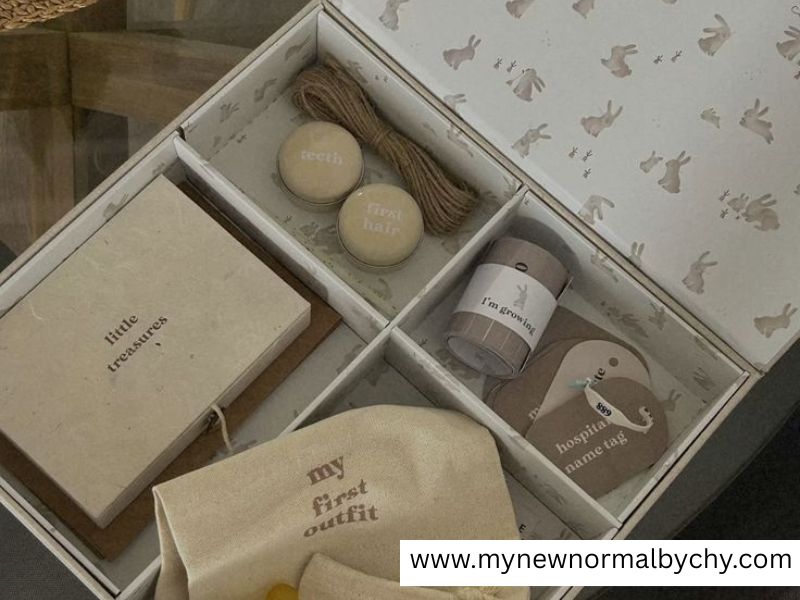
Parents often struggle with sentimental baby items.
Instead of letting keepsakes accumulate throughout the closet, create a dedicated memory box.
Store items such as:
- Hospital bracelets
- First outfit
- Ultrasound photos
- Baby announcement cards
- Special gifts
Having a designated space helps preserve memories without creating clutter.
15. Use Clear Storage Containers
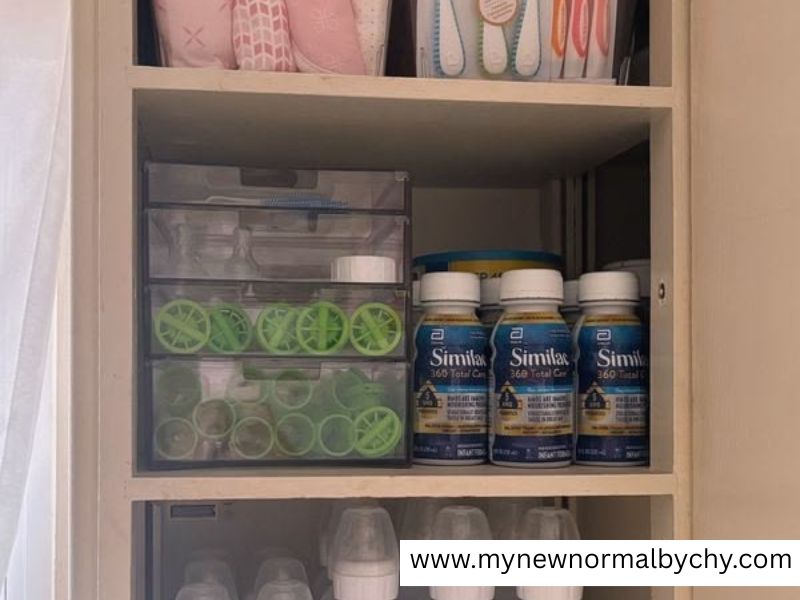
Clear containers make it easy to identify contents instantly.
They’re perfect for storing:
- Hand-me-downs
- Future clothing sizes
- Seasonal accessories
- Backup supplies
You’ll spend less time searching and more time enjoying your baby.
16. Organize Clothing by Category
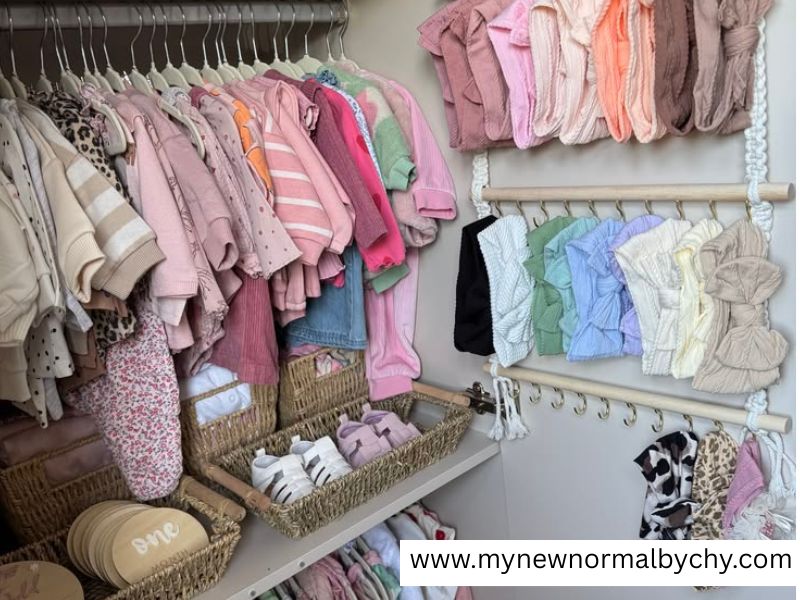
Beyond size, organizing by category can simplify daily routines.
Separate:
- Onesies
- Sleepwear
- Pants
- Dresses
- Jackets
- Special occasion outfits
This system works particularly well for babies who have accumulated a larger wardrobe.
17. Keep a Donation Bin Nearby

Babies outgrow clothing quickly.
Keep a donation basket in the closet so you can immediately place:
- Outgrown clothing
- Unused accessories
- Duplicate items
This prevents clutter from building up over time.
Regular decluttering is one of the easiest ways to maintain an organized nursery.
18. Create a Mini Toddler Transition Zone
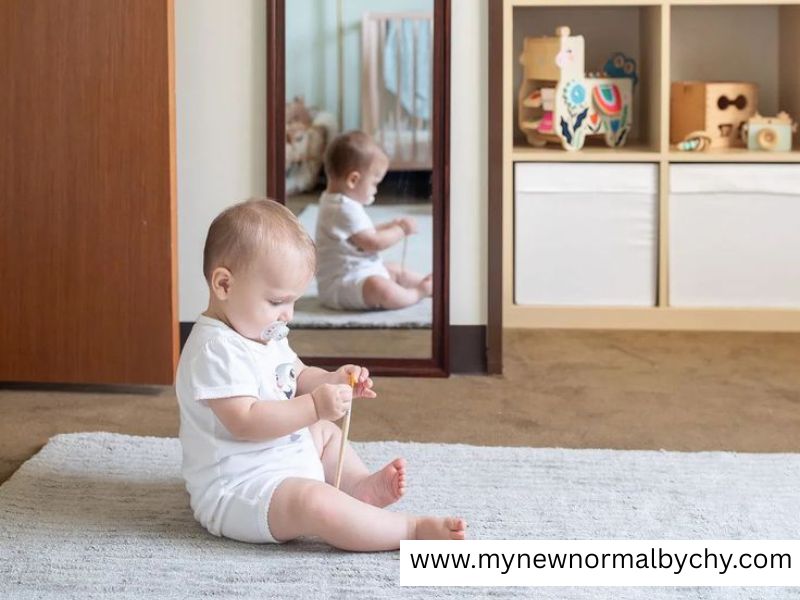
If your baby is approaching toddlerhood, start preparing early.
Reserve a small section of the closet for:
- Toddler clothing
- Shoes
- Learning toys
- Seasonal gear
This makes future transitions much easier.
You can find additional practical tips in our Ultimate Baby and Toddler Care Guide for Busy Parents.
Nursery Organization Mistakes to Avoid
Even the best organization systems can become frustrating if they’re too complicated.
Avoid these common mistakes:
1. Keeping Every Baby Item
Babies accumulate a lot of stuff.
Regularly declutter items that are no longer needed.
2. Ignoring Vertical Space
Walls, doors, and upper shelves offer valuable storage opportunities.
3. Overbuying Storage Containers
Purchase storage solutions only after assessing your actual needs.
4. Not Labeling Containers
Without labels, systems quickly fall apart.
5. Storing Frequently Used Items Too High
Keep everyday essentials within easy reach.
Baby Nursery Closet Organization Ideas for Small Spaces
How Often Should You Reorganize a Nursery Closet?
A good rule of thumb is every 2–3 months.
Babies grow rapidly, and their needs change constantly.
Use each reorganization session to:
- Remove outgrown clothes
- Rotate seasonal items
- Restock supplies
- Declutter unused items
This prevents the closet from becoming overwhelming.
Thoughtful Organization Can Make Parenting Easier
A small nursery closet doesn’t have to feel cramped or chaotic.
With the right combination of storage bins, shelving, labels, and smart organization systems, you can maximize every inch of space while keeping your baby’s essentials easily accessible.
The goal isn’t perfection, it’s creating a functional space that supports your daily routine and reduces stress.
As your little one grows, maintaining an organized nursery will make everything from diaper changes to getting dressed much easier.
And while you’re focused on caring for your baby, don’t forget to take care of yourself too. If you’re shopping for a special parent in your life, take a look at our guide to Thoughtful Birthday Gift Ideas for New Moms Who Deserve a Treat for inspiration.
Frequently Asked Questions
1. How do I organize a baby closet with no shelves?
Use hanging organizers, over-the-door storage, storage bins, and cube organizers to create additional storage without installing permanent shelves.
2. What is the best way to organize baby clothes?
Organize clothes by size first and category second. Use closet dividers to separate sizes and keep current clothing easily accessible.
3. How many clothes should I keep in the nursery closet?
Keep only the current size and season readily available. Store future sizes and seasonal clothing elsewhere to reduce clutter.
4. How often should I declutter baby clothes?
Most parents find that every 2–3 months works well since babies grow so quickly during their first years.
5. Are storage bins or baskets better for nursery organization?
Both work well. Clear storage bins are ideal for visibility, while decorative baskets provide a softer, more stylish look for open storage.
6. How can I maximize a very small nursery closet?
Use vertical space, install a second hanging rod, add floating shelves, use door organizers, and store off-season clothing elsewhere to maximize storage.
Leave a Reply