A small closet can be frustrating, especially when your clothes, shoes, bags, and accessories never seem to fit. You might have enough room for your everyday outfits, but there is hardly any space left for jackets, extra bedding, or seasonal items. The good news is that these 30 small closet ideas can help you make better use of the space you already have. You do not need a huge walk-in wardrobe or an expensive renovation to create a closet that works for you.
Sometimes, the problem is not the size of your closet. It is how the space is arranged. Empty wall space, crowded shelves, bulky hangers, and piles of shoes can make even a decent-sized closet feel too small. A few thoughtful changes can make everything easier to find and put away.
Whether you live in a small apartment, share a bedroom, or have a narrow closet in an older home, there are plenty of ways to improve your storage. You can use the back of the door, add shelves, organize your shoes, and make better use of the space above your clothes.
The best part is that many of these ideas are affordable and easy to try. You can start with simple changes before deciding whether you need new storage products.
If you want a closet that feels less crowded and more practical, these 30 small closet ideas will help you create a space that looks neat and works for your everyday routine.
Check out
30 DIY Small Kitchen Storage Ideas on a Budget
30 Christmas Tree Ideas for Small Spaces and Apartments
Baby Nursery Closet Organization Ideas for Small Spaces
30 Small Closet Ideas to Maximize Your Storage Space
1. Switch to Slim Velvet Hangers
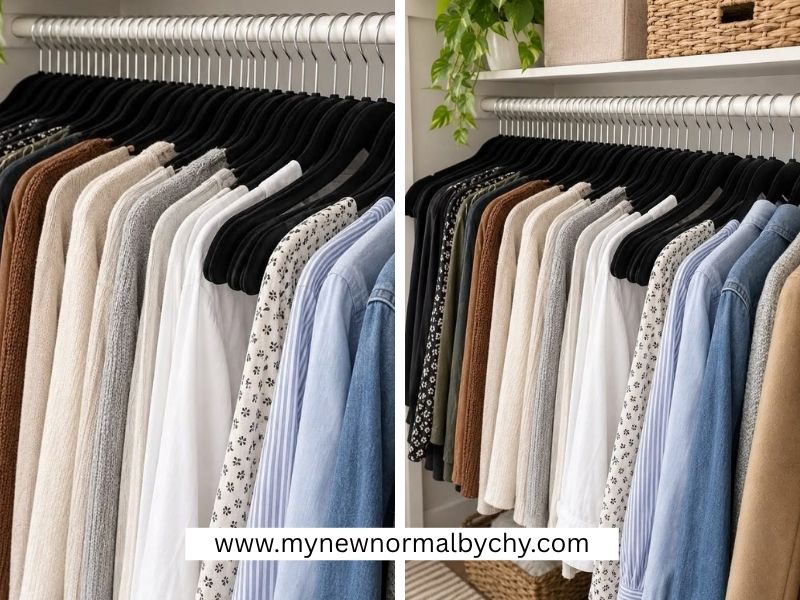
One of the easiest ways to make more room in a small closet is to replace bulky hangers with slim velvet hangers. Traditional plastic and wooden hangers can take up more space than you realize. When you have several shirts, dresses, and jackets hanging together, those extra inches quickly add up.
Slim hangers create a more compact arrangement. Their non-slip surface also helps prevent clothes from falling onto the closet floor. This is especially helpful if you have silky blouses, lightweight tops, or dresses with wide necklines.
Choose hangers in one color for a cleaner appearance. Black, beige, white, and dusty pink are lovely options if you want your closet to look coordinated. You can also use matching hangers for different clothing categories.
Before buying a new set, count how many hangers you actually need. This helps you avoid purchasing too many and creating more clutter.
Among these 30 small closet ideas, this is a great place to start because it requires little effort. You do not have to drill holes, install shelves, or rearrange your entire bedroom.
Simply change your hangers, organize your clothes, and see how much easier it becomes to move items along the rail. Keep sturdy hangers for heavier coats and suits when necessary.
2. Add a Second Hanging Rod
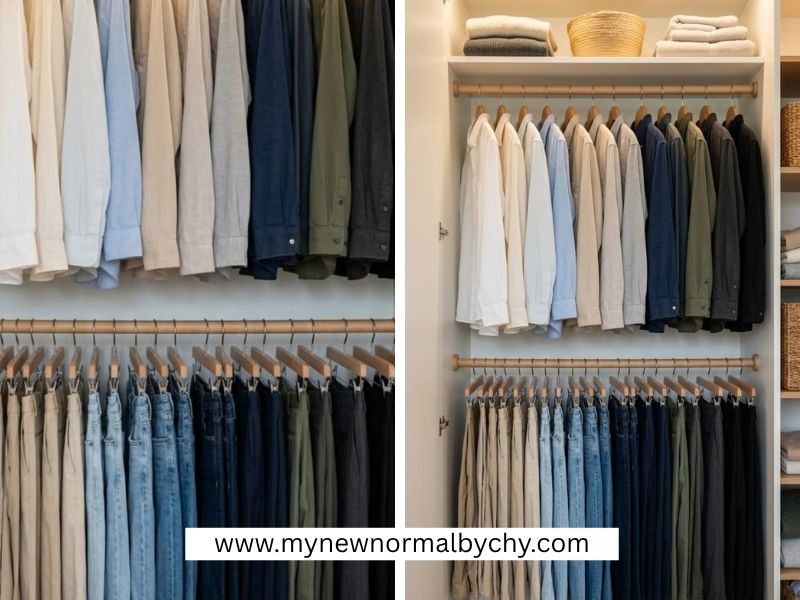
If your closet has one hanging rod and a large empty space underneath, you may be missing a useful storage opportunity. Adding a second rod can help you make better use of that vertical space.
A double-hanging arrangement works particularly well for shirts, blouses, skirts, trousers, and shorter jackets. You can keep tops on the upper rod and place trousers or skirts on the lower one. This creates two separate clothing areas without requiring a wider closet.
Adjustable hanging extenders are useful if you do not want to install a permanent system. However, check the weight limits and measurements before choosing one. You should also make sure the lower section leaves enough room for your clothes to hang freely.
Long dresses, coats, and jumpsuits may need a separate section with enough height. Therefore, do not divide every part of your closet into two levels if you regularly wear longer garments.
These 30 small closet ideas are most effective when they match your wardrobe. Look at the clothes you own before changing the layout.
A second rod can make a noticeable difference in a narrow closet. It gives shorter clothing a dedicated space and helps prevent everything from becoming one crowded row.
Save for later
30 Wall Corner Decor Ideas to Transform Empty Spaces in Your Home
30 Beautiful Master Bedroom Decor Ideas for a Cozy and Stylish Space
30 Stylish & Practical Modern Kitchen Inspirations for Small Spaces
3. Use the Space Above the Hanging Rod
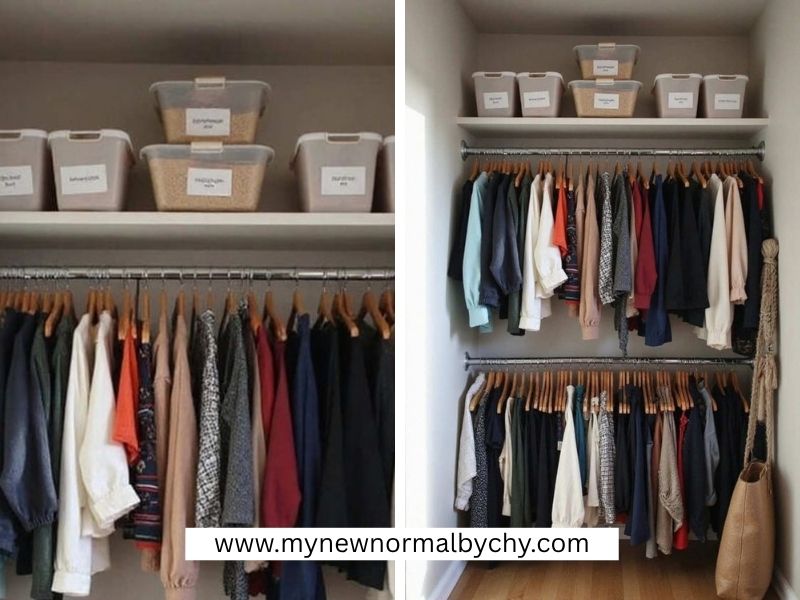
The area above your hanging rod is easy to overlook. In many closets, there is a large gap between the rod and the ceiling or top shelf. Instead of leaving this space empty, use it for items you do not need every day.
You can install an additional shelf if the closet structure allows it. Alternatively, use suitable storage boxes on an existing high shelf. This area works well for spare pillowcases, seasonal accessories, travel bags, and clothing you only wear occasionally.
Choose boxes that fit the available depth. Oversized containers can make it difficult to reach the back of the shelf or remove items without disturbing everything else.
Clear containers help you see what is inside, while fabric boxes create a softer appearance. Labels are useful if you store several categories in the same area.
When trying these 30 small closet ideas, remember that high shelves should hold lightweight items you can retrieve safely. Keep frequently used clothing at a comfortable height rather than placing it somewhere difficult to reach.
If the shelf is too high, use a suitable step stool with stable footing and ask for help when needed. There is no benefit in creating extra storage if accessing it becomes inconvenient.
4. Organize the Back of the Closet Door
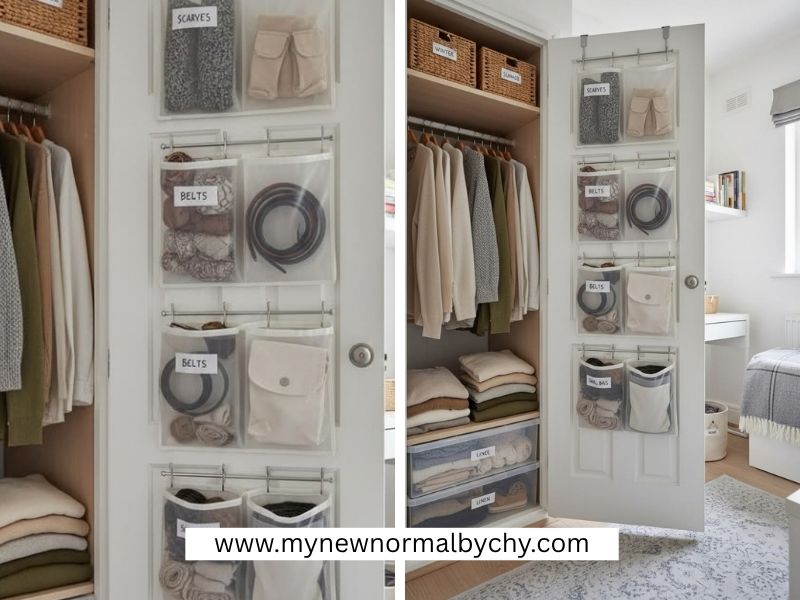
The back of your closet door can provide extra storage without taking up much room inside the closet. It is a useful spot for accessories that otherwise end up on shelves, chairs, or bedroom furniture.
An over-the-door organizer can hold scarves, belts, small bags, caps, and other lightweight items. Some designs have pockets, while others use hooks or horizontal bars.
Choose an organizer based on what you need to store. Deep pockets are useful for soft accessories, while hooks work better for items you want to grab quickly. If you prefer a minimal look, a simple row of hooks may be enough.
Before buying anything, check whether the organizer will interfere with the door closing. Also consider the clearance between the door and nearby furniture.
These 30 small closet ideas include several ways to use forgotten spaces, and the door is one of the easiest places to begin.
For a rental home, a removable organizer can be more convenient than drilling into the door. Make sure the product is suitable for your door type and weight requirements.
Keep the most frequently used accessories at eye level. Place occasional items higher or lower so the door remains easy to use.
5. Install Small Hooks on the Side Walls
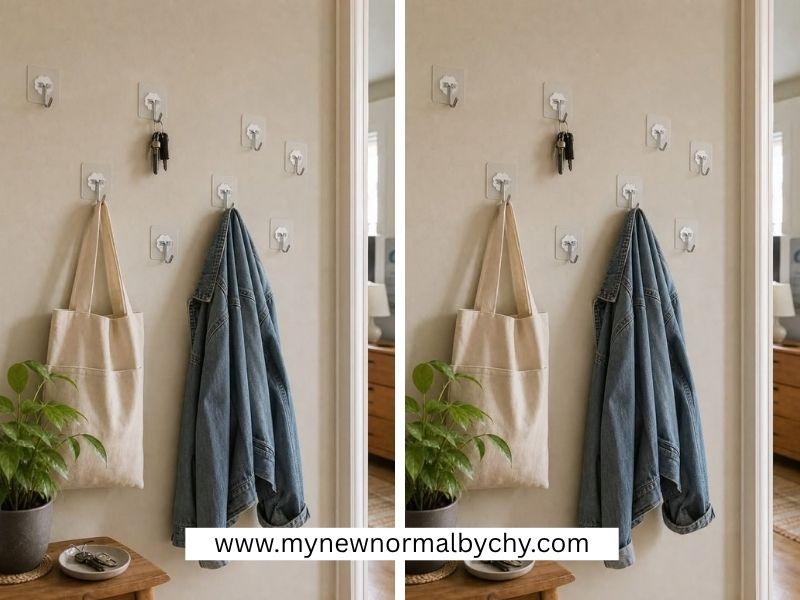
The inside walls of a closet can hold more than you might expect. If you have narrow spaces on either side of your hanging clothes, consider adding a few hooks.
Hooks are useful for handbags, belts, hats, scarves, and lightweight accessories. They also give items a clear place to return to after use. This can help prevent the familiar pile of bags that collects on the bedroom floor.
You do not need to cover every wall with hooks. Start with a small group and leave enough room between each item so that accessories do not overlap excessively.
For a coordinated look, choose hooks in matching finishes. Black, brass, white, and wood-effect designs can work well with different bedroom styles.
If you are renting, removable hooks may be a suitable option for lightweight items. Check the recommended weight limit and surface compatibility before installing them.
Among these 30 small closet ideas, this solution is particularly helpful when your closet has more hanging space than shelf space.
Avoid placing hooks where they snag delicate fabrics or interfere with the door. You want to create extra storage without making it harder to access your clothes.
A few well-placed hooks can make your closet feel more organized while keeping everyday accessories within easy reach.
You may also like
Simple Bedroom Decorating Ideas for Couples: Create a Cozy and Stylish Shared Space
Smart Shared Kids’ Bedroom Ideas for Small Spaces
Small Bathroom Inspiration with Shower and Bathtub: 27 Stylish Ideas to Maximize Your Space
Bedroom Decor Ideas for a Cozy and Relaxing Space
35 Classy Plus Size Fall Outfits That Look Expensive and Chic
6. Use Shelf Dividers to Keep Clothes Neat

Folded clothes can quickly turn into messy piles, especially when you stack several different categories on one shelf. Shelf dividers help separate these piles and keep them from leaning into one another.
You can use dividers for sweaters, jeans, handbags, towels, and other folded items. They create small sections, making it easier to remove one item without disturbing everything beside it.
Clear acrylic dividers offer a simple appearance, while metal and wooden options can complement different closet styles. Adjustable dividers are worth considering if your shelf measurements are unusual.
Before choosing a set, measure the shelf depth and thickness. Some dividers are designed for specific shelf types, so checking compatibility can prevent disappointment.
These 30 small closet ideas are not only about adding more storage. They are also about making the storage you already have easier to use.
Try grouping similar clothes together before adding the dividers. For example, keep jeans in one section, knitwear in another, and everyday T-shirts in a separate stack.
Do not make the piles too tall. Shorter stacks are easier to maintain and less likely to collapse when you take something from the bottom.
Once everything has a clear place, putting away laundry becomes much simpler. You will also be able to see what you own without searching through several layers of clothing.
7. Add a Small Shoe Rack
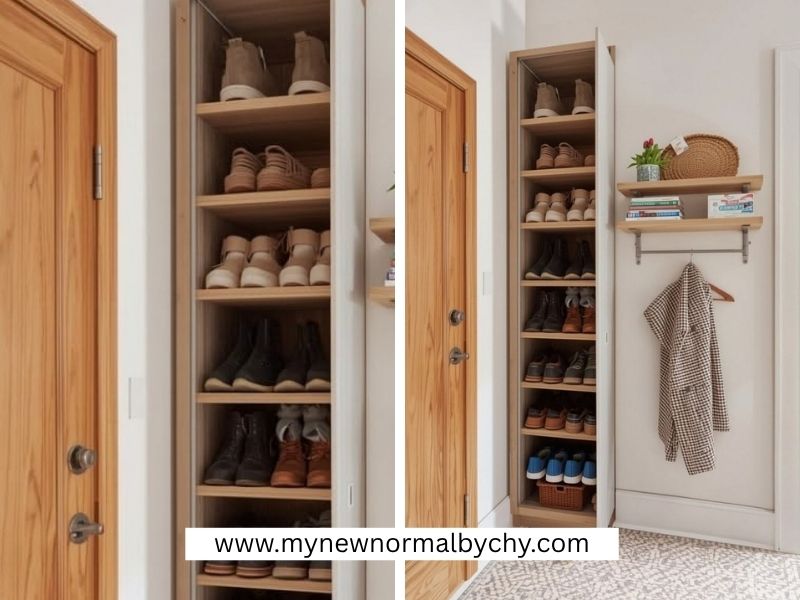
Shoes can take over the floor of a small closet surprisingly quickly. Trainers, sandals, heels, flats, and boots may end up scattered across the bottom, leaving little room for anything else.
A compact shoe rack helps keep pairs together and uses vertical space more efficiently. Choose a narrow rack that fits your closet dimensions without blocking the door or hanging clothes.
A two-tier or three-tier design may be enough for everyday shoes. If you own several pairs, you can place frequently worn footwear on the lower levels and less frequently used pairs higher up.
Measure your shoes before buying a rack, especially if you have larger trainers or tall footwear. Some shelves are too narrow or too close together for certain styles.
These 30 small closet ideas can help you create a more practical closet without turning it into a complicated storage project.
If you do not have room for a rack, consider a low shoe organizer or a dedicated row along one side of the closet floor. The goal is to keep shoes accessible while leaving enough space to move other items.
Clean shoes before storing them, and allow damp footwear to dry properly. This keeps the closet fresher and helps protect the items stored nearby.
8. Store Seasonal Clothes in Labeled Bins
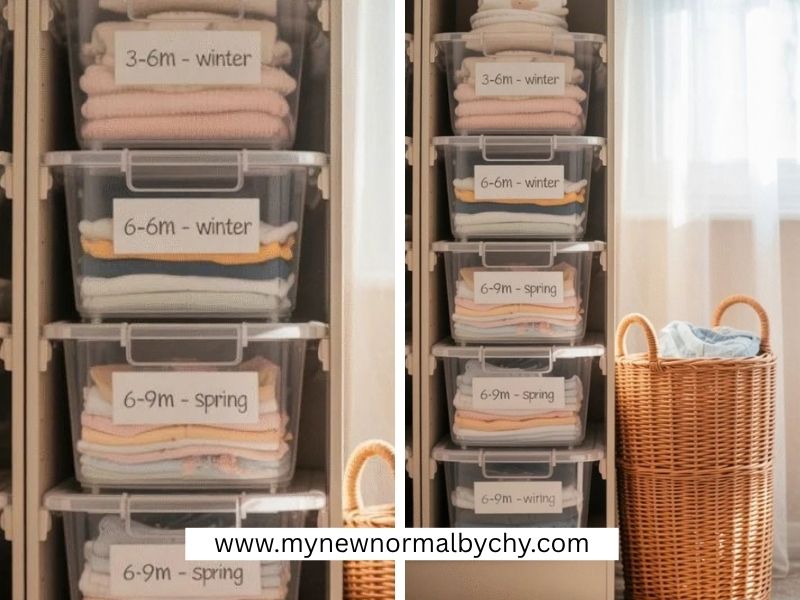
Not every piece of clothing needs to stay in your everyday closet throughout the year. Heavy coats, thick sweaters, holiday outfits, and special-occasion clothing can take up valuable space when you are not using them.
Seasonal storage bins help you move these items out of the main clothing area. You can place them on a high shelf, under a bed, or in another suitable storage location.
Choose containers that are easy to lift and fit the available space. Clear bins make it easier to identify their contents, while opaque bins can create a more uniform appearance.
Add simple labels such as “Winter Clothes,” “Occasion Wear,” or “Extra Bedding.” This saves you from opening several containers whenever you need something.
These 30 small closet ideas work best when you store seasonal items thoughtfully. Clean and dry clothing before packing it away. Follow the care instructions for delicate fabrics, and avoid compressing items that may lose their shape.
You should also review stored clothes when the season changes. If you no longer use an item, consider whether it still needs to take up storage space.
Keep the clothes you wear most often within easy reach. Seasonal storage should make your daily routine simpler, not force you to move several boxes every morning.
9. Try a Hanging Closet Organizer
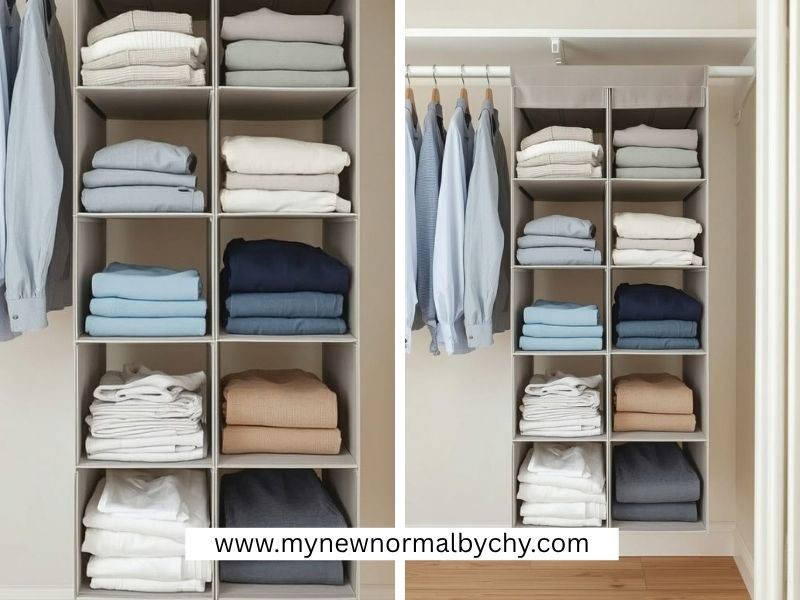
A hanging closet organizer is useful when you have limited shelving but enough space on your clothing rail. These organizers usually have several fabric compartments that hang vertically from a rod.
They can hold folded T-shirts, leggings, light sweaters, handbags, or accessories. Some designs also include side pockets for smaller items.
The main advantage is that they use vertical space rather than spreading items across the closet floor. They are also easy to remove if you move to another home or want to change your arrangement.
Choose an organizer with enough support for the items you plan to store. Heavy clothing can make a lightweight fabric organizer sag, so avoid overloading it.
Among these 30 small closet ideas, this is a practical option for renters, students, and anyone working with a basic closet that has only one rail.
Place the organizer toward one side of the closet so it does not crowd the clothes you hang. You can use the compartments for categories that are difficult to stack neatly on a shelf.
Keep the most frequently used items in the middle compartments. Reserve the top and bottom sections for things you use less often.
A hanging organizer works best when each compartment has a clear purpose. Otherwise, it can become another place where miscellaneous items collect.
Check out
45 Kitchen Cabinet Color Ideas to Transform Your Home in Style
50 Fun Christmas Bucket List Ideas for Kids to Try This Holiday Season
30 Stylish & Practical Modern Kitchen Inspirations for Small Spaces
10. Use Matching Storage Baskets
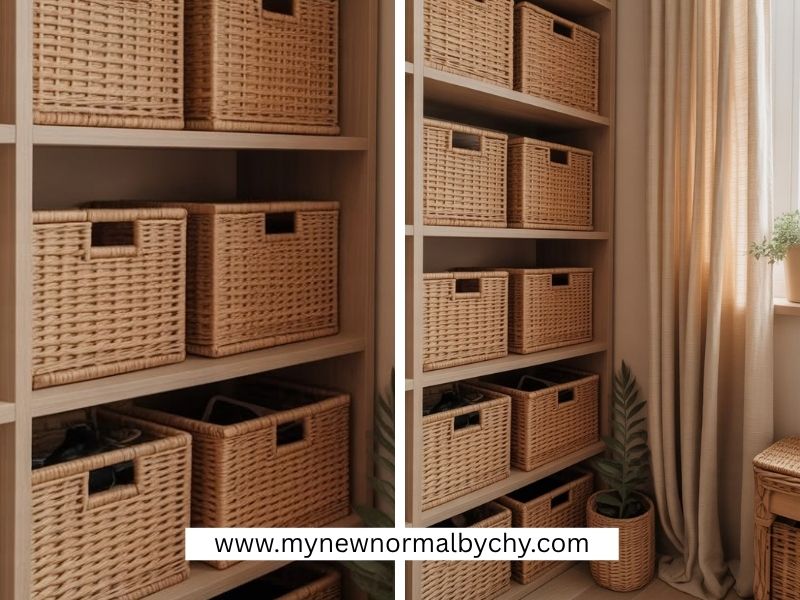
Matching storage baskets can make a small closet look calmer while keeping loose items together. They are particularly helpful for accessories, workout clothes, underwear, socks, and other small pieces that are difficult to organize on open shelves.
Choose baskets that fit your shelf dimensions. Several smaller baskets may be easier to manage than one oversized container because you can remove each category separately.
Fabric baskets create a soft, relaxed appearance. Woven baskets can add texture, while plastic options are often easy to wipe clean.
You do not need to buy a full matching collection immediately. Start with the categories that currently create the most clutter and add containers as needed.
These 30 small closet ideas can help you balance practical storage with a style that suits your bedroom.
Labels are especially useful when several baskets look alike. You can mark them with words such as “Socks,” “Belts,” “Gym Wear,” or “Everyday Bags.”
Avoid filling every basket to the top. If you need to force items inside, the container may be too small or the category may need to be divided.
Leave enough space to remove baskets easily. The best storage system is one you can maintain without rearranging half the closet every time you need something.
11. Add a Small Drawer Unit
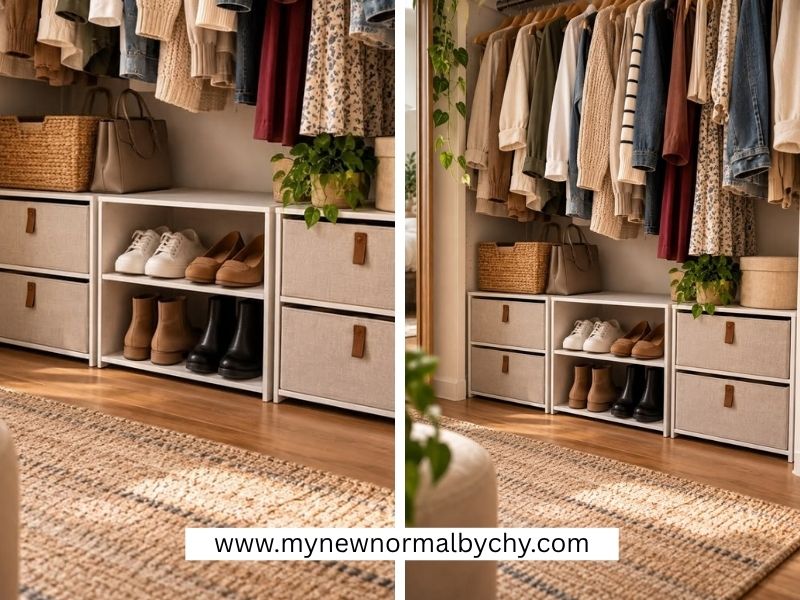
If your closet has enough floor space, a narrow drawer unit can provide useful storage for smaller clothing items. It can be especially helpful if your bedroom does not have enough room for a separate dresser.
Use the drawers for socks, underwear, sleepwear, accessories, and folded basics. This keeps small items out of sight while making them easy to find.
Measure the closet carefully before choosing a unit. You need enough room for the drawers to open fully, and the unit should not block the doorway or interfere with hanging clothes.
A tall, narrow design may work better than a wide cabinet. However, make sure the unit is stable and follow the manufacturer’s instructions for safe installation and use.
These 30 small closet ideas can help you create more functional storage without adding another large piece of bedroom furniture.
Drawer dividers are useful if you want to separate several categories within the same drawer. For example, one drawer can hold socks and tights, while another stores everyday accessories.
Keep heavier items in lower drawers and lighter items above. This arrangement makes the unit easier to use and helps keep everything organized.
If your closet is too narrow for drawers, consider a small drawer organizer on an existing shelf instead.
12. Make Better Use of Under-Bed Storage
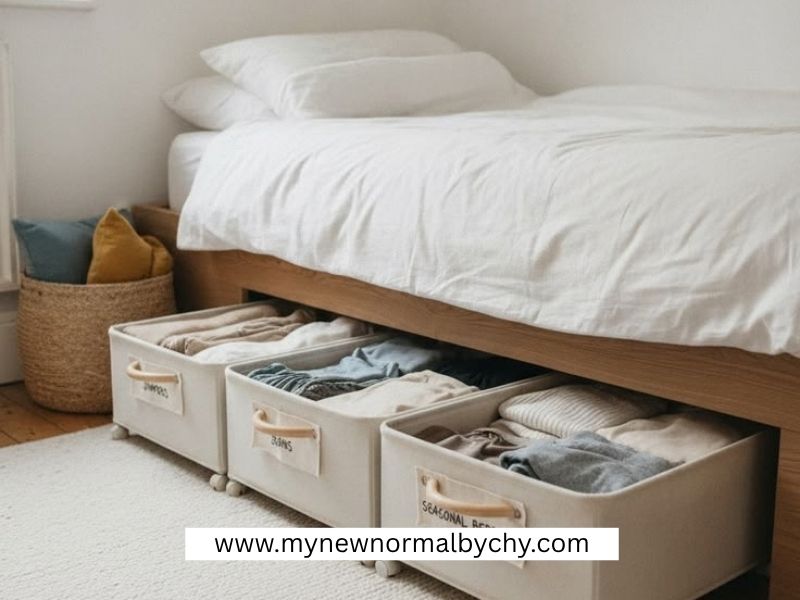
Your closet does not have to hold every single item you own. If your bedroom has unused space under the bed, it can become an extension of your clothing storage.
Under-bed containers are useful for spare bedding, seasonal clothes, occasion wear, and accessories you do not need daily. Choose low-profile boxes that fit comfortably beneath your bed frame.
Wheeled containers can be convenient because they slide in and out easily. If you prefer a softer appearance, fabric storage bags may work well for lightweight items.
Before storing anything, check the clearance beneath the bed. You should also consider whether the area collects dust and whether the container protects its contents adequately.
These 30 small closet ideas are designed to help you distribute storage across your bedroom instead of forcing everything into one small space.
Use labels so you can identify each container without pulling every box out. For example, keep spare sheets in one container and seasonal accessories in another.
Store only clean, completely dry items. Follow appropriate care instructions for delicate garments, leather goods, and other materials that may need special protection.
The key is to keep everyday essentials in your closet and move occasional items elsewhere. This leaves more room for the clothes and accessories you use regularly.
13. Install a Pegboard for Accessories
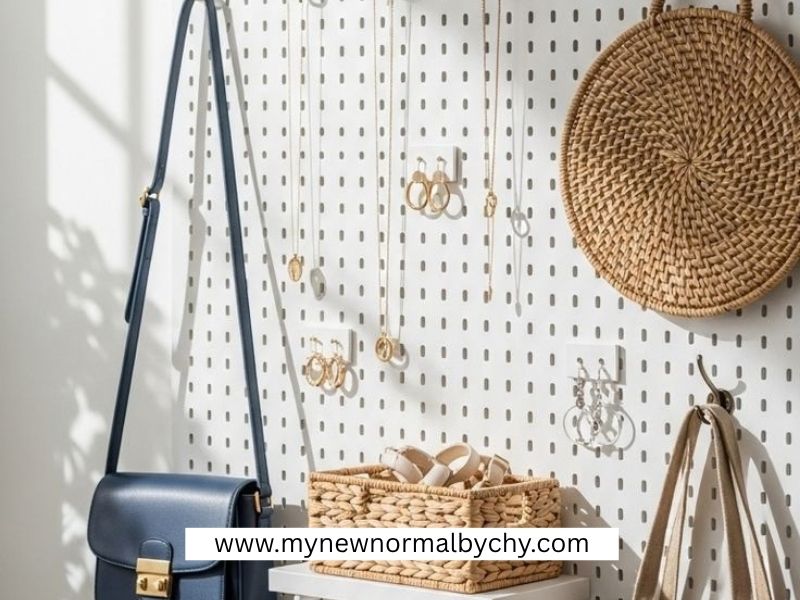
A pegboard can turn an empty closet wall into a flexible accessory organizer. It has small holes that allow you to reposition hooks and other compatible attachments whenever your storage needs change.
Use a pegboard for lightweight handbags, caps, belts, necklaces, and small accessories. You can also add little baskets for items that do not hang easily.
This solution works best when you have a suitable section of wall that is not already occupied by clothes or shelves. Measure the available area before choosing a board.
For a coordinated look, paint the pegboard in a color that complements your bedroom. White, beige, pale pink, and light wood tones can create a softer appearance.
Among these 30 small closet ideas, a pegboard is one of the more customizable options. You can change the arrangement as your collection grows or your needs shift.
Make sure the board and its mounting system are suitable for the wall and the weight of the items. Ask for help with installation if necessary, particularly if you are renting.
Avoid overcrowding the board. Leave enough space between accessories so you can remove them without tangling straps or knocking other items down.
A well-arranged pegboard can turn a previously unused wall into a practical storage feature.
14. Use Clear Boxes for Small Accessories
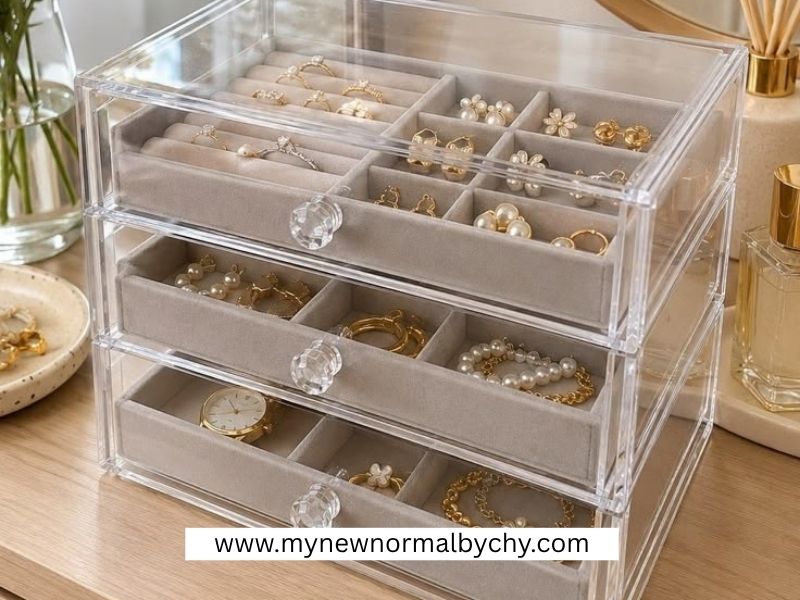
Small accessories are easy to lose when they are stored loosely in a drawer or on a shelf. Hair accessories, belts, scarves, watches, and other everyday items can quickly become mixed together.
Clear storage boxes make it easier to see what you own. You can place them on an existing shelf or inside a drawer, depending on your closet layout.
Choose boxes with lids if you want to protect the contents from dust. Open-top containers may be more convenient for accessories you use every day.
It is helpful to separate items by category rather than placing everything in one large box. For example, use one container for belts, another for hair accessories, and another for small bags or travel accessories.
These 30 small closet ideas can help you avoid buying duplicates simply because you cannot find the items you already have.
Measure your shelf before purchasing containers. A box that is too tall or wide may waste valuable space or make the shelf difficult to use.
If you have many similar containers, add small labels to the front. This makes it easier to find things without removing every box.
Keep delicate accessories in suitable compartments to prevent tangling or damage. A little organization now can save you time whenever you get dressed.
15. Create a Dedicated Handbag Section
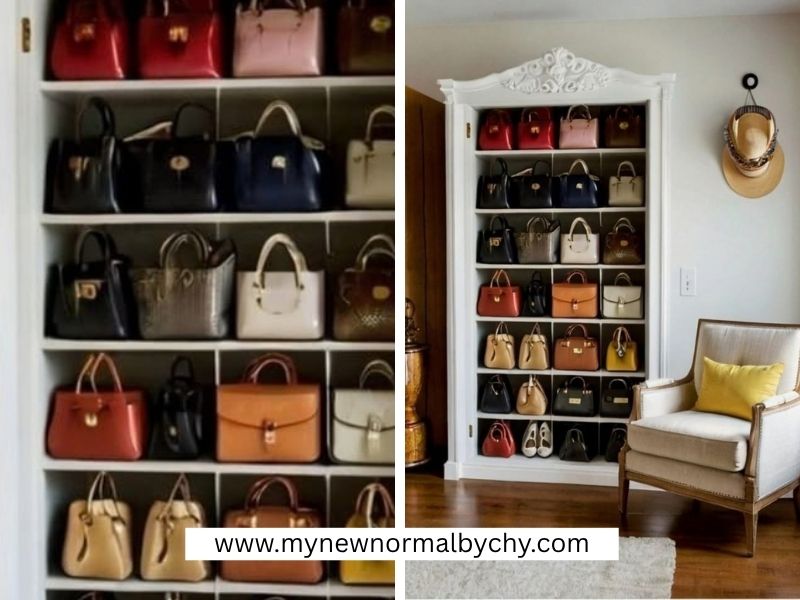
Handbags can occupy a surprising amount of closet space, especially when they are placed randomly on shelves. Their shapes can also make it difficult to stack other items neatly.
Creating a dedicated handbag section helps you keep everything together. You can use a shelf, a row of hooks, or individual compartments, depending on the size and shape of your collection.
Store bags upright when their structure allows it. If a bag needs support, use suitable inserts or clean, soft material to help it maintain its shape.
Avoid hanging every handbag by its straps, especially if the straps are delicate or the bags are heavy. Prolonged hanging can place unnecessary stress on some materials.
Among these 30 small closet ideas, this option is useful for anyone who owns several handbags but does not have a separate display area.
Place your most frequently used bags at an easy-to-reach height. Special-occasion bags can go on a higher shelf if they are stored safely and remain accessible.
You can use dividers to stop bags from leaning against each other. This also makes it easier to remove one without disturbing the rest.
Keep the section simple. Your handbags should be easy to see, easy to reach, and easy to return to their proper place after use.
16. Use Vertical Shoe Organizers
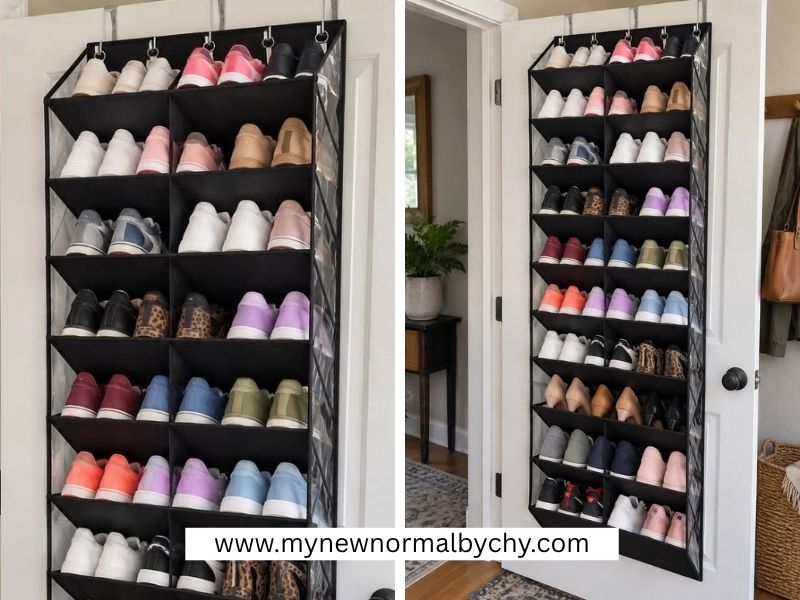
If a traditional shoe rack takes up too much floor space, a vertical shoe organizer may be a better choice. It allows you to arrange footwear in several levels rather than spreading it across the bottom of the closet.
Depending on your layout, you can choose a hanging organizer, a narrow tower, or a stackable shelf system. Each option works differently, so consider your closet’s width, depth, and door clearance.
Hanging shoe organizers can be useful for flats, sandals, and lightweight trainers. Shelved designs may work better for heavier footwear.
These 30 small closet ideas encourage you to look upward when floor space is limited.
Before buying a vertical organizer, check how much room each pair needs. Bulky trainers and ankle boots may not fit into small fabric pockets. You should also make sure the organizer does not push clothing into the doorway.
Arrange shoes by category or frequency of use. Everyday footwear can stay near the bottom, while occasional pairs can occupy higher sections.
Avoid placing damp shoes inside closed compartments. Allow them to dry first, and clean away dirt before returning them to storage.
A vertical shoe system can make the closet floor easier to clean and help you find the right pair without digging through a pile.
17. Add a Pull-Out Basket or Drawer
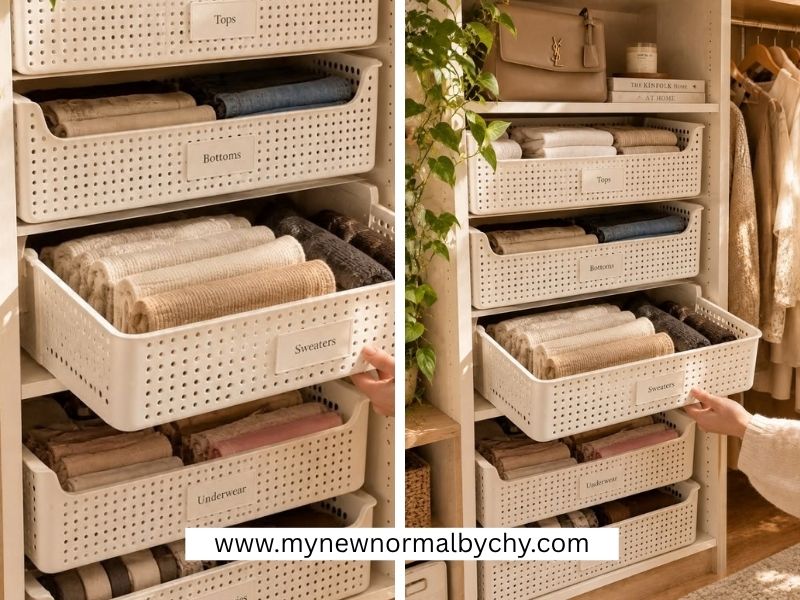
Deep shelves can be awkward because smaller items tend to disappear at the back. A pull-out basket or drawer helps you reach those items without removing everything in front of them.
Depending on the closet design, you can use a freestanding pull-out basket or install a compatible drawer system. Some products fit inside existing shelving, while others require more permanent installation.
Pull-out storage works well for folded T-shirts, accessories, workout clothes, and other items you want to keep accessible.
Measure the shelf opening and available depth before choosing a product. Check the weight capacity, installation requirements, and whether the drawer can extend fully without hitting the door.
Among these 30 small closet ideas, this one is especially useful for deep closets that feel difficult to manage.
Use separate baskets for different clothing categories. For example, one can hold gym clothes while another contains everyday tops. This prevents items from becoming mixed together.
Keep the contents light enough for the drawer to slide smoothly. Heavy loads can make some systems difficult to operate or place unnecessary strain on their fittings.
If you cannot install a pull-out system, a lightweight handled basket can offer similar convenience. Simply slide it forward when you need something from the back.
18. Fold Clothes Vertically in Drawers
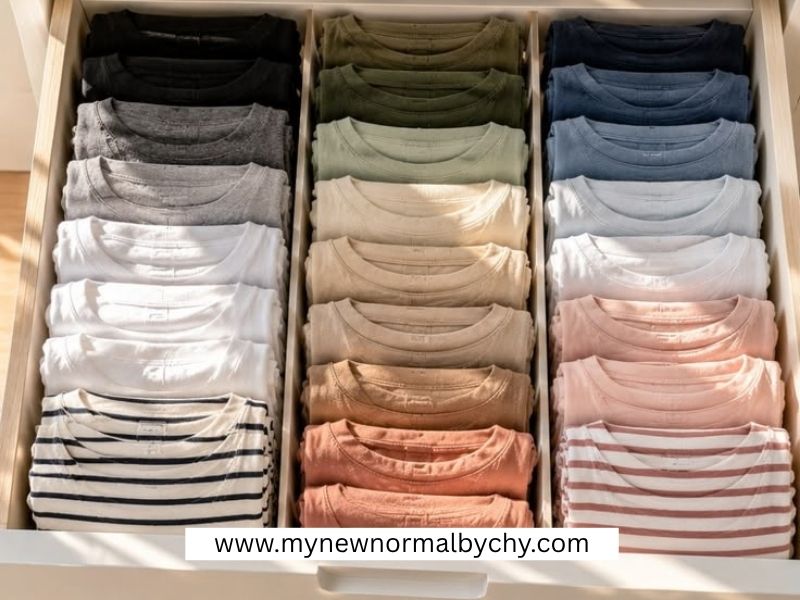
If you store clothes in drawers, vertical folding can help you see more of what you own. Instead of stacking T-shirts in several layers, fold them into compact shapes and arrange them upright.
This method works well for T-shirts, leggings, pajamas, casual tops, and lightweight clothing. You can place the folded items side by side, making it easier to identify each piece.
The main benefit is visibility. When clothes are stacked flat, the items underneath can be forgotten. Vertical folding allows you to see more pieces at once.
These 30 small closet ideas can improve your storage without requiring new furniture or expensive organizers.
Start by emptying one drawer. Fold the clothes into similar sizes, then arrange them in rows. Drawer dividers can help keep each category in place, especially if the drawer is wide.
Do not force thick sweaters or delicate garments into a folding style that could damage their shape. Some items are better stored flat or on suitable hangers.
You should also leave enough space for the drawer to close comfortably. Overfilling it can make clothes harder to remove and put away.
Try this method with one category first. Once you find a folding style that works for you, repeat it with other everyday clothing.
19. Store Bags Inside One Another
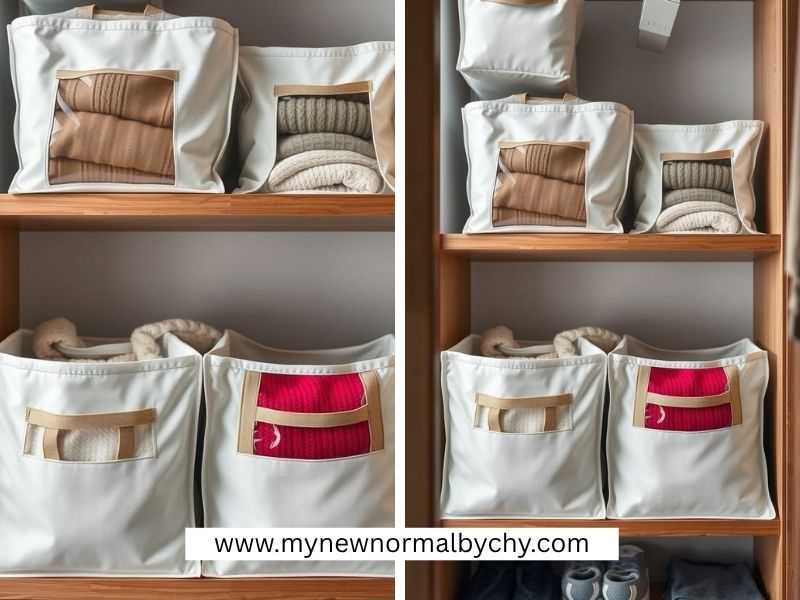
Small handbags, pouches, and fabric bags can take up more room when they are stored separately. Nesting suitable bags inside one another is a simple way to reduce clutter.
Choose bags with similar shapes that can fit together without forcing them. Larger bags can hold smaller ones, while small pouches can be grouped inside a larger handbag.
Before nesting them, empty every pocket and check that the bags are clean and dry. Remove loose items such as receipts, coins, and old packaging.
These 30 small closet ideas can help you reclaim shelf space without purchasing additional storage products.
Be careful with structured handbags, delicate materials, or pieces with embellishments. Do not press them together in a way that could cause scratches, creases, or loss of shape. Use suitable protective covers when needed.
You can reserve one shelf or basket for nested bags. This keeps them separate from shoes and folded clothing, making the closet easier to maintain.
Keep your everyday bag accessible rather than placing it at the bottom of a large stack. Store occasional bags farther back or higher up if you can reach them safely.
This approach is particularly helpful when you own several small bags but have limited shelving.
20. Use a Tension Rod for Lightweight Accessories
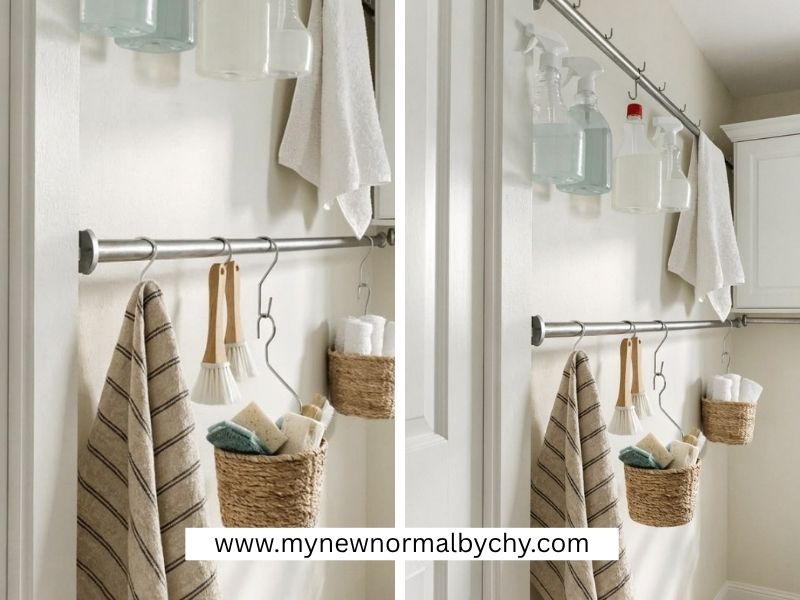
A tension rod can create a useful hanging area without permanent installation when the closet has suitable side walls. Depending on the design, it can fit between two surfaces and provide an extra place for lightweight items.
You might use a properly fitted tension rod for scarves, belts, or compatible accessory hooks. It can also help separate a section of the closet if the dimensions allow.
Choose a rod designed for the span and weight you need. Follow the manufacturer’s instructions, and make sure it is secure before adding anything.
These 30 small closet ideas include flexible solutions for people who cannot make permanent changes to their closets.
Avoid treating a lightweight tension rod as a replacement for a strong clothing rail. It may not be suitable for heavy coats, multiple bags, or other substantial loads.
Measure the available width carefully. A rod that is too short may slip, while one that is too long may not fit properly.
You can place scarves on individual rings or hooks to keep them visible and accessible. This prevents them from becoming tangled in a drawer or buried beneath other accessories.
If your closet walls are uneven or the rod cannot be fitted securely, choose another storage method. Safety and stability matter more than squeezing one extra organizer into the space.
21. Give Long Clothes Their Own Section
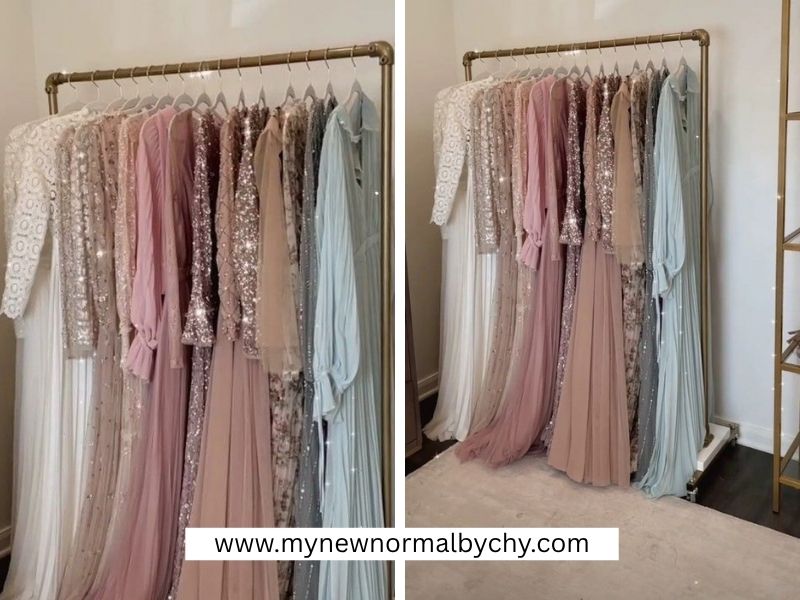
Long dresses, coats, jumpsuits, and other full-length garments need more vertical room than shirts and skirts. When these items are mixed with shorter clothing, they can cover the closet floor and make it difficult to store anything underneath.
Creating a dedicated long-clothing section helps solve this problem. Keep long garments together on one side of the closet, leaving the remaining rail available for shorter pieces.
If your closet is narrow, use the longest available hanging area for these garments. You can then add a suitable shoe organizer or low storage container in another section, provided there is enough clearance.
Among these 30 small closet ideas, this one focuses on arranging your wardrobe around the space each item needs.
Avoid folding long garments over hangers unless the fabric and garment design allow it. Some pieces can develop creases or lose their shape when stored incorrectly.
You can use slim hangers to keep the section compact, but choose suitable supports for heavy coats and structured garments.
Keep the floor beneath long clothes relatively clear. This prevents hems from resting on dusty surfaces and makes cleaning easier.
A dedicated section also makes it easier to find dresses and coats when you are getting ready for work, school, events, or special occasions.
22. Organize Your Clothes by Category
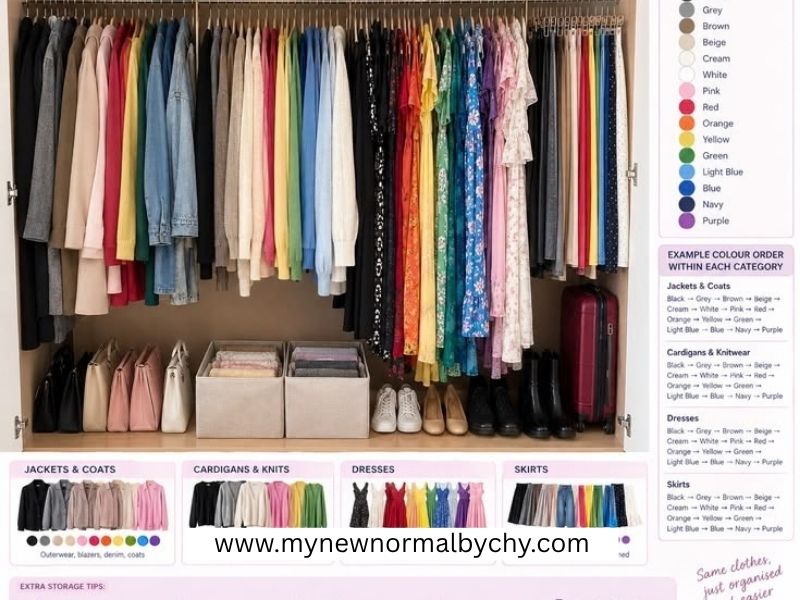
A small closet becomes easier to manage when similar items have a clear place. Instead of hanging everything randomly, group your clothes by category.
You might keep shirts together, trousers in another section, dresses in a separate area, and jackets near one end of the rail. Folded clothing can follow the same system on shelves or in drawers.
This arrangement helps you see what you own and makes getting dressed less frustrating. You can also identify gaps in your wardrobe without buying items you already have.
These 30 small closet ideas are not only about physical storage. A clear arrangement can make the entire closet feel more functional.
You do not need to organize every item by color. Start with the categories you use most often, then arrange items within each category in a way that feels natural.
For example, you can place work shirts together and casual tops in another section. If you prefer, you can arrange each group from light to dark for a coordinated appearance.
Leave some room between categories so the closet does not become tightly packed again.
Review the arrangement after a few weeks. If you regularly put clothes in the wrong place, the categories may need to be simpler or more convenient.
23. Use a Small Step Shelf for Folded Items
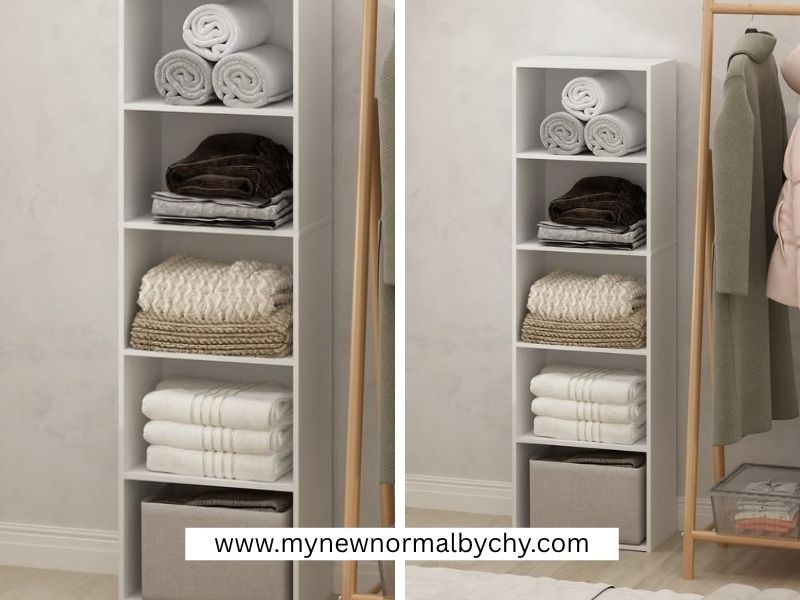
A shelf riser creates a second level on an existing shelf. It is useful when the space above folded clothes is too tall to be used efficiently.
You can place a riser above a row of folded T-shirts, accessories, or smaller bags. This creates an additional surface without requiring you to install another full shelf.
Choose a riser that fits securely and can support the items you plan to store. Measure the shelf width, depth, and available height before buying one.
Among these 30 small closet ideas, shelf risers are especially helpful for closets with tall shelves and limited vertical divisions.
You can use the lower area for items you reach frequently and the upper surface for lightweight accessories or folded clothing. Keep both levels accessible enough that you do not have to remove several items just to reach one.
Avoid using a riser if it makes the shelf too crowded or unstable. You should still be able to see and remove items comfortably.
If your shelves already have limited height, consider a smaller riser or a different storage solution.
The goal is to make the existing shelf more useful, not simply to add another level that becomes difficult to maintain.
24. Keep Everyday Items at Eye Level
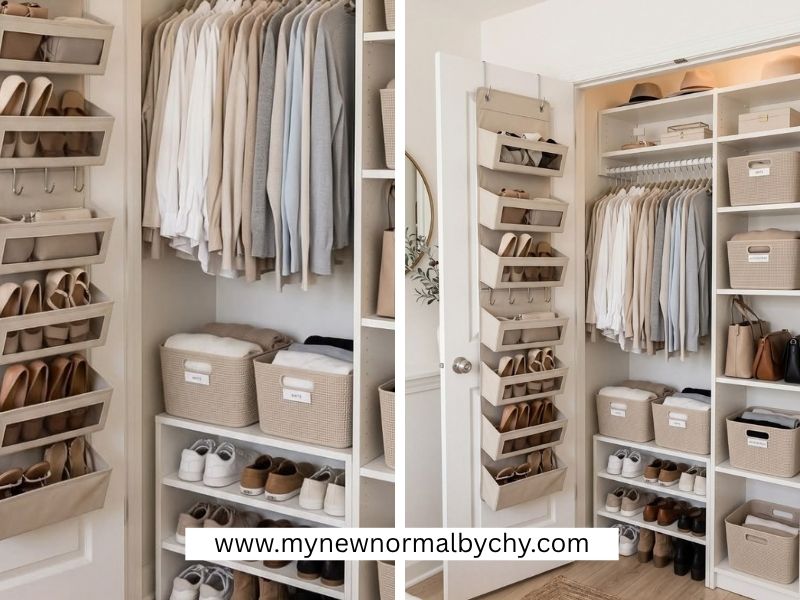
Not every part of your closet is equally convenient. The middle section is usually easier to reach than the highest shelf or the floor. That makes it a good place for clothing and accessories you use regularly.
Keep your everyday tops, frequently worn trousers, favorite bags, and current-season pieces within easy reach. You can reserve higher shelves for occasional items and lower storage areas for suitable footwear or containers.
This arrangement reduces the time you spend searching for things. It also makes it easier to return items to their proper places after use.
These 30 small closet ideas work best when they support your daily habits rather than forcing you to follow a complicated system.
Think about your routine. If you wear certain outfits for work or school, keep those pieces together. If you exercise regularly, create an accessible section for your workout clothes.
Place accessories near the clothing they complement when possible. For example, belts can sit close to trousers, while scarves can stay near jackets.
You can change these zones as your routine changes throughout the year.
A practical closet does not need to look perfect every day. It simply needs to make your belongings easy to find, use, and put away.
25. Use a Small Basket for Laundry
Laundry can become part of the closet clutter when worn clothes are left on the floor or placed over a chair. A small laundry basket gives those items a clear destination.
Choose a basket that fits the available space without blocking your shoes or hanging clothes. A narrow rectangular design may work better than a wide round basket in a tight closet.
If your closet is too small, place the basket just outside the door or in another convenient bedroom corner.
Among these 30 small closet ideas, this is one of the simplest ways to prevent everyday mess from building up.
Choose a basket that is easy to carry and clean. Handles can be useful if you regularly take laundry to another room.
Avoid placing damp towels or sweaty clothing in a closed basket for long periods. Allow items to dry when necessary and follow your usual laundry routine.
You can also use separate small bags for delicate clothing if you prefer to keep those items apart.
The most important thing is consistency. When worn clothes have a designated place, they are less likely to end up scattered across the room.
This small change can make the entire bedroom feel tidier without requiring any major closet makeover.
26. Create a Small Accessory Drawer

Accessories often become cluttered because they are too small to hang neatly and too varied to stack together. A dedicated accessory drawer can solve this problem.
If your closet already has drawers, add small dividers to separate belts, watches, hair accessories, and other everyday pieces. If you do not have drawers, a compact organizer placed on a shelf may work just as well.
Choose compartments based on the accessories you own. Large compartments may suit belts and sunglasses, while smaller ones can hold hair ties and other little items.
These 30 small closet ideas can help you use awkward spaces more effectively.
Before organizing the drawer, remove anything that is broken, no longer useful, or stored in the wrong place. Keep frequently used items near the front so they are easy to reach.
Avoid filling the drawer with too many categories. If everything is squeezed together, it will be difficult to find what you need.
You can also use small trays that lift out individually. This makes it easier to access the contents and clean the drawer when necessary.
A well-organized accessory drawer keeps small items together while freeing up shelf and hanging space for clothing.
27. Add Lighting to a Dark Closet
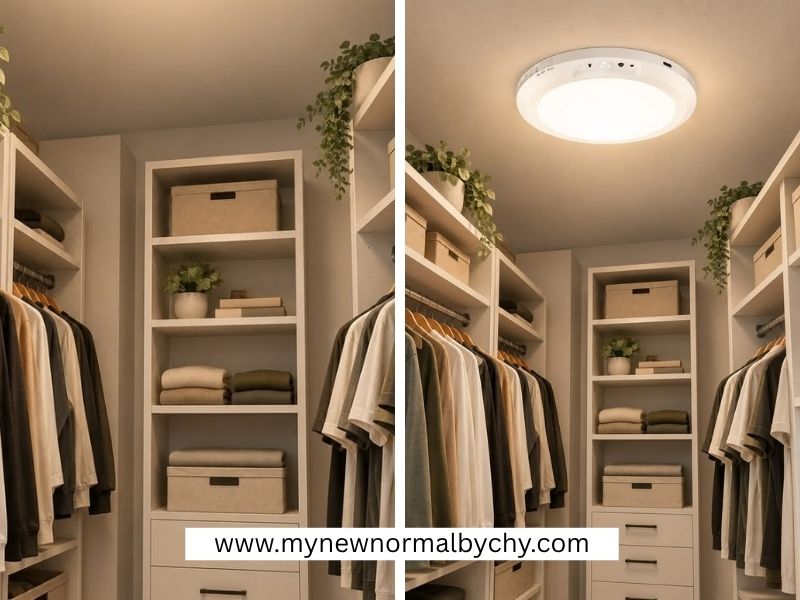
A dark closet can feel more crowded because you cannot easily see the items stored inside. Even when there is enough space, poor lighting makes it harder to find clothes and maintain an organized arrangement.
A battery-powered or rechargeable closet light can improve visibility without requiring major electrical work. Some lights attach to a shelf or wall, while others use motion sensors.
Choose a light that is suitable for the closet’s size and installation surface. Follow the manufacturer’s instructions, especially when positioning the light near clothing or other stored materials.
These 30 small closet ideas include practical changes that make the closet easier to use, not just changes that create more storage.
Place the light where it illuminates the hanging rail, shelves, and floor. If the closet has several sections, one light may not provide enough coverage.
Avoid leaving loose wires where they can snag clothing or create a tripping hazard. Recharge or replace batteries as recommended.
Good lighting also helps you coordinate outfits because you can see colors more clearly. It makes it easier to spot items that have slipped behind other clothes.
Although lighting does not physically increase storage capacity, it helps you use the available space more effectively.
28. Choose a Freestanding Wardrobe Organizer
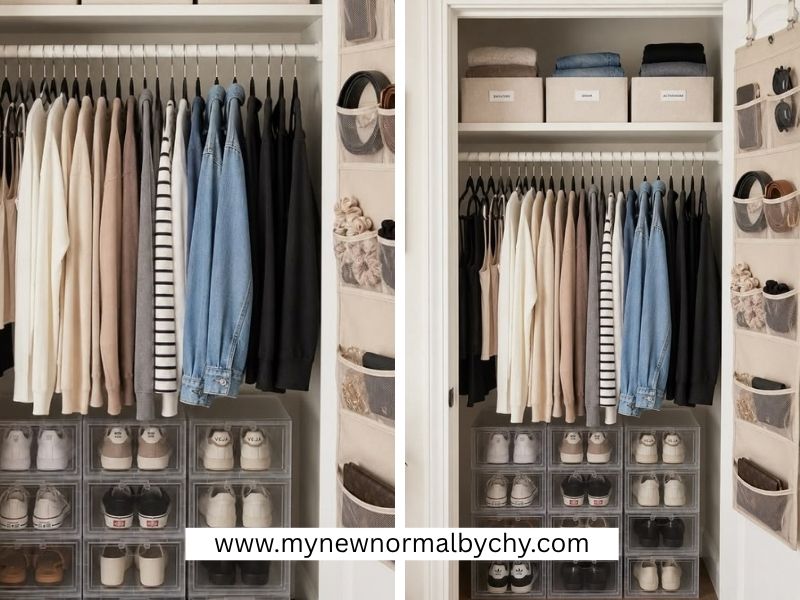
If your closet has a simple rail and very little shelving, a freestanding wardrobe organizer may provide the structure you need. These systems can include shelves, drawers, hanging sections, or a combination of storage options.
Choose a compact design that matches the dimensions of your closet. A narrow unit may fit beside the hanging rail, while a low shelf system may work underneath shorter clothes.
Before buying one, measure the available width, height, and depth. Make sure the unit does not interfere with the door or make the closet difficult to enter.
Among these 30 small closet ideas, this is a useful option when you want a more complete storage system without committing to built-in cabinetry.
Look for a design that solves a specific problem. If folded clothing is your main concern, prioritize shelves. If accessories are difficult to manage, choose a unit with smaller compartments.
Keep the organizer stable and follow the manufacturer’s assembly instructions. Larger or taller units may need additional support.
You can also consider modular systems that allow you to add or remove components over time.
A freestanding organizer works best when it fits the closet instead of overwhelming it. Measure first and choose a layout that leaves enough room for your everyday belongings.
29. Rotate Your Wardrobe Throughout the Year
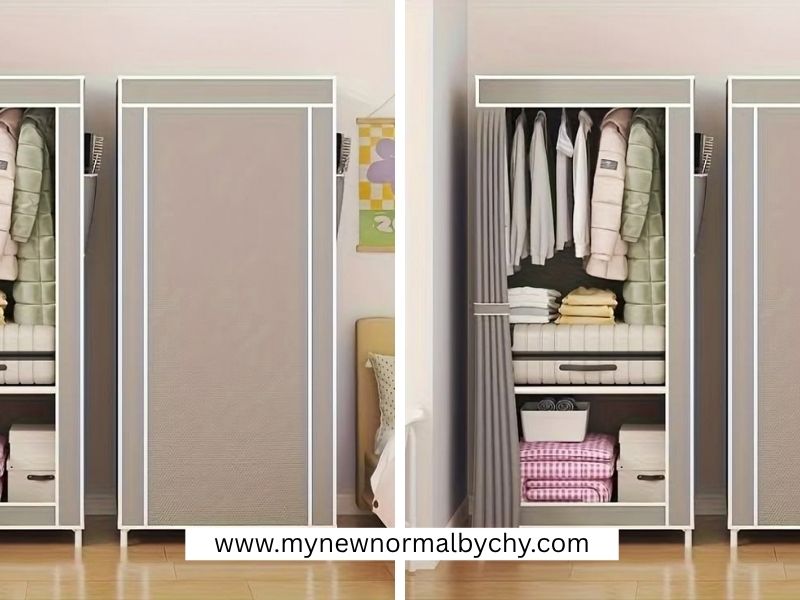
A small closet may struggle to hold every seasonal item at once. Rotating your wardrobe can help you keep the clothes you need most accessible without giving up pieces you still use at other times of the year.
At the start of a new season, move suitable clothing to the front of the closet. Store items you are unlikely to wear for several months in labeled containers or another appropriate storage area.
For example, lightweight tops and dresses may take priority during warmer weather, while coats and sweaters become easier to reach during colder months.
These 30 small closet ideas are more effective when you combine them with regular wardrobe maintenance.
Before storing clothing, make sure it is clean and dry. Follow care labels and use suitable storage methods for delicate fabrics.
Wardrobe rotation does not mean you must get rid of everything you are not wearing right now. It simply means organizing your closet around your current needs.
Review stored items when the season changes. This gives you a chance to repair garments, donate pieces you no longer use, and identify anything that needs a different storage solution.
A seasonal rotation can keep your everyday closet less crowded and make it easier to plan outfits.
30. Give Every Item a Permanent Home
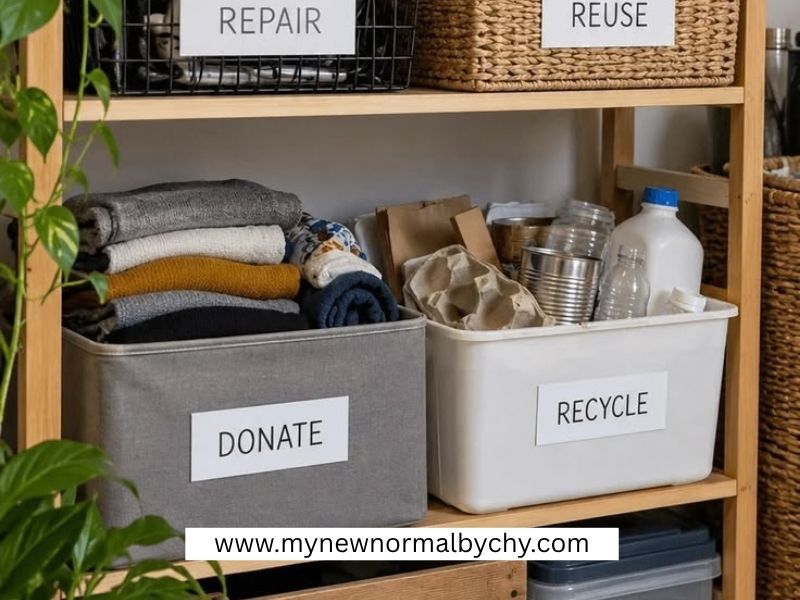
The final idea brings everything together. Even the best shelves, baskets, and hangers will not help much if your belongings do not have designated places.
Choose a home for each category in your closet. Hang shirts on the appropriate rail, place folded clothing on its assigned shelf, keep shoes in one section, and store accessories in suitable containers.
You do not need a complicated labeling system. A few simple categories are often enough to keep everything organized.
These 30 small closet ideas can help you create a space that remains useful long after the initial tidy-up.
When you bring home a new item, decide where it belongs before adding it to the closet. If there is no suitable space, consider rearranging the existing layout or reviewing what you already own.
Try to return items to their assigned places after wearing them. This small habit prevents clutter from building up again.
You can also set aside a few minutes every week to straighten shelves, return misplaced accessories, and remove anything that does not belong in the closet.
Remember that an organized closet does not have to look perfect. It simply needs to work for you.
When every item has a clear place, you spend less time searching for things and more time enjoying a bedroom that feels calm and functional.
Why These Small Closet Ideas Make Such a Difference
A small closet does not have to limit how comfortably you store your belongings. The right arrangement can make the available space easier to use, even when you cannot expand the closet itself.
The biggest improvement often comes from combining a few simple changes. Slim hangers reduce unnecessary bulk, while a second hanging rod makes better use of vertical space. Shelf dividers keep folded clothes from becoming messy, and small baskets give accessories a clear place to stay.
These 30 small closet ideas also encourage you to look beyond the obvious storage areas. The back of the door, the upper shelf, and the space beneath your bed can all serve a purpose.
Another benefit is that an organized closet makes everyday routines easier. When clothes are grouped by category and frequently used items remain within reach, you can find what you need without moving several things out of the way.
You may also spend less on duplicate purchases because you can see what you already own. Clear boxes, labels, and designated accessory sections make it easier to keep track of smaller belongings.
You do not need to try all 30 ideas at once. Start with the area that causes the most frustration. If shoes cover the floor, begin with a shoe rack. If clothes are crowded on one rail, try slim hangers or a second hanging rod.
Choose solutions that match your actual needs and budget. A small closet can become much more practical when every inch has a clear purpose.
FAQs About Small Closet Ideas
1. How can I maximize storage in a very small closet?
Start by measuring the closet and identifying the areas that are not being used effectively. Replace bulky hangers, group similar clothes together, and use vertical space for additional shelving or hanging storage.
You can also add hooks to suitable walls, use the back of the door, and store seasonal items elsewhere. These 30 small closet ideas offer several ways to improve storage without renovating your bedroom.
2. What should I put in a small closet to save space?
Choose storage products that fit your belongings and the available dimensions. Slim hangers, shelf dividers, compact shoe racks, hanging organizers, and small baskets can all help.
Avoid buying organizers before measuring your closet. Products that are too large may reduce the space you have available rather than improve it.
3. How do I organize a small closet without spending much money?
Start with the items you already own. Rearrange your clothes by category, fold suitable garments neatly, and use existing boxes or baskets to group accessories.
You can also move seasonal items to under-bed storage and use removable hooks for lightweight belongings. Try the simplest changes first, then buy storage products only when you identify a specific need.
4. How can I make my small closet look bigger?
Keep the arrangement simple and avoid overcrowding the shelves. Matching hangers, coordinated storage baskets, clear containers, and good lighting can make the closet feel more open.
You can also group similar clothing together and keep the floor as clear as possible. A tidy layout often makes a greater difference than adding more decorative items.
5. Are hanging organizers good for small closets?
Yes, hanging organizers can be helpful when your closet has enough rail space but limited shelving. They work well for folded clothes, accessories, and lightweight items.
Choose a design that fits your closet’s height and depth. Avoid overloading it, and make sure it does not push your clothes into the doorway.
6. How do I store shoes in a small closet?
A compact shoe rack, vertical organizer, or suitable under-bed container can help keep shoes together. Place frequently worn pairs where they are easy to reach and store occasional footwear elsewhere.
Measure your shoes and available storage space before buying an organizer. Allow damp footwear to dry before putting it away.
7. How often should I reorganize a small closet?
A quick weekly tidy-up can help you keep the closet manageable. Return misplaced items, straighten folded clothing, and remove anything that does not belong.
A more thorough review every few months can help you adjust for seasonal changes. You can also reorganize whenever your storage needs change.
8. Can I organize a small closet without drilling holes?
Yes. You can use freestanding organizers, suitable over-the-door storage, hanging shelf units, baskets, and removable hooks for lightweight items.
Always check the weight limits and compatibility of removable products. If you rent, make sure any installation method is permitted and will not damage the property.
Conclusion
A small closet can be practical, attractive, and easier to maintain when you make thoughtful use of the available space. You do not need a large wardrobe or an expensive makeover to create a better storage system.
These 30 small closet ideas show how simple changes can make a difference. From slim hangers and extra shelving to shoe racks, storage baskets, and seasonal organization, there are options for different budgets and closet layouts.
Start with one or two changes that solve your biggest storage problems. Measure before buying organizers, keep frequently used items within reach, and give your belongings a clear place to stay.
Most importantly, choose a system that fits your everyday routine. Your closet should make getting dressed easier, not create another chore.
With a little planning and regular maintenance, you can make the most of your small closet and enjoy a bedroom that feels more organized, functional, and comfortable.
Leave a Reply