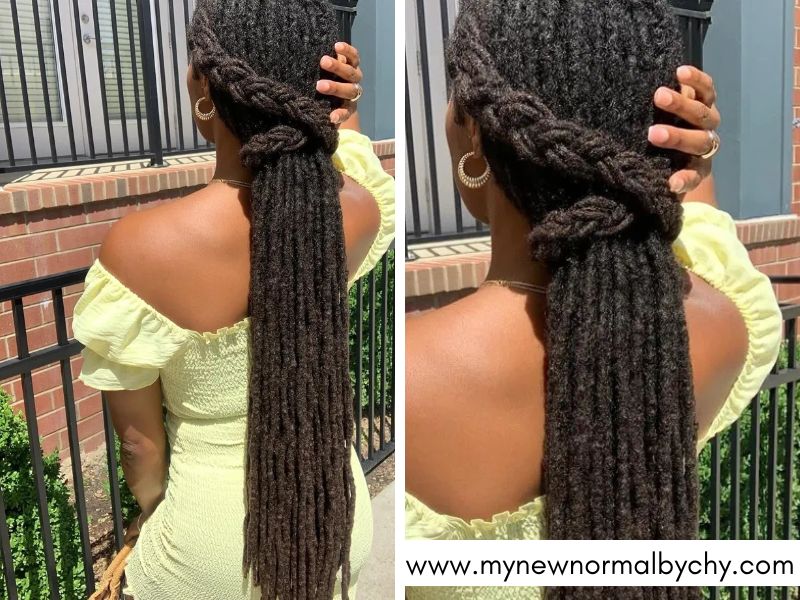
1. Traditional Locs
2. Freeform and Semi-Freeform Locs
3. Wicks (or Budded Locs)
Understanding the Foundations of long loc styles for Women With Thick Natural Hair
The Sizing Spectrum for High-Density Hair
- Traditional Locs (0.7cm to 1.5cm+): These are classic, bold sections. On thick hair, traditional locs mature into thick, rope-like structures with immense individual presence. They require less frequent maintenance but become significantly heavy when they reach your mid-back or waist.
- Microlocs (0.3cm to 0.6cm): These provide a highly versatile, high-count aesthetic. For individuals with high hair density, microlocs create an incredibly full, voluminous mane resembling loose kinky hair from a distance.
- Sisterlocks: This formal, trademarked interlocking system utilizes a precise grid and specialized tools. Because thick hair contains a high concentration of strands per square inch, a Sisterlocks installation can result in 500 to 800 individual locs. This delivers massive volume but requires extensive installation and re-tightening timelines.
Check out our
25 Medium Passion Twist Hairstyles with Curly Ends
Passion twist maintenance tips for long-lasting protective styles
The Weight Factor and Scalp Health
Long Loc Styles for Women with Thick Natural Hair
High-Impact Updos for Heavy, Long Locs
1. The Architectural High Top-Knot Bun
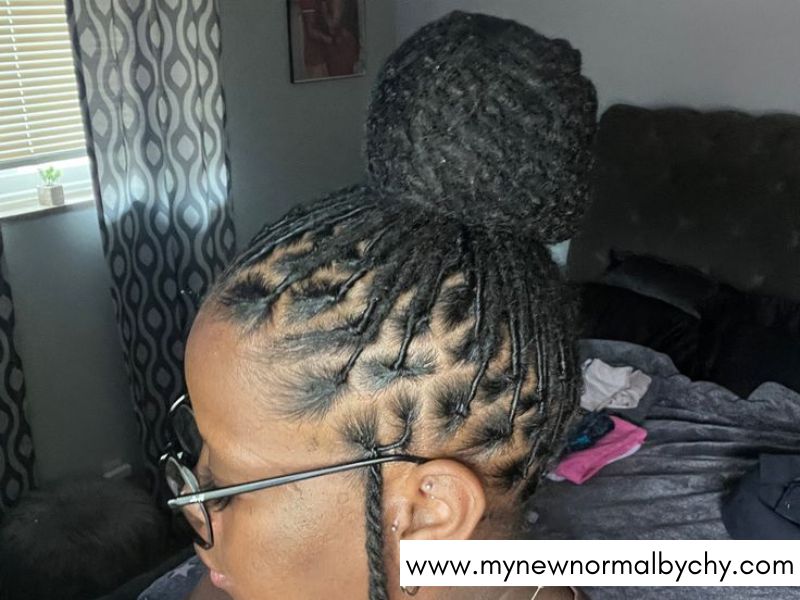
- The Technique: Instead of pulling all your locs through a single pony elastic, flip your head forward. Gather the core center locs and tie them loosely into an anchor ponytail using a long, thick satin scrunchie or a dedicated loc wrap ribbon. Next, take the remaining locs from the perimeter and wrap them around this central anchor point in circular, overlapping layers. Tuck the tips of the final wrapped locs underneath the base of the bun to secure the style without hairpins.
- Why it works for thick hair: By dividing the updo into an anchor section and a wrapping section, you prevent the weight of the long locs from pulling downward on your delicate front hairline.
2. The Tiered Goddess Crown (Multi-Bun Bougie Style)
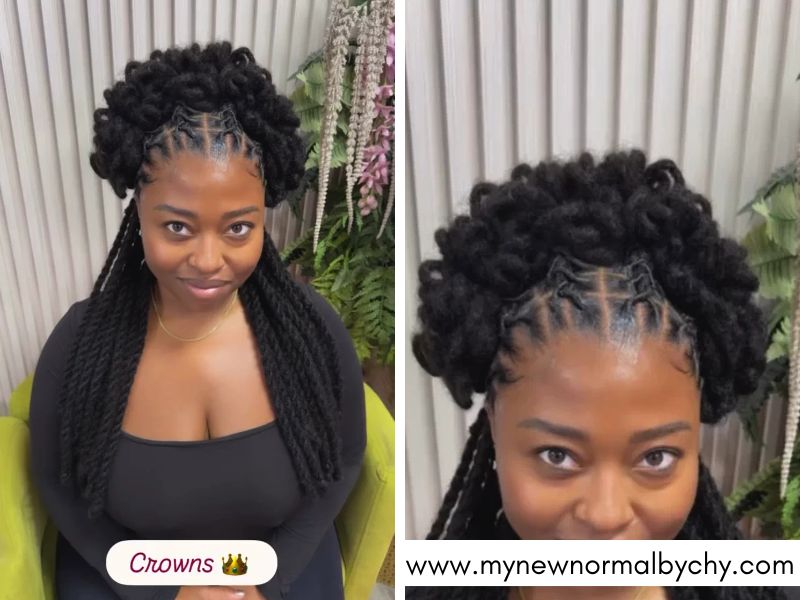
- The Technique: Section your locs horizontally into two or three equal tiers across your head. Twist the top section into a neat front bun sitting near your crown. Take the middle section directly below it, twist it loosely, and secure it as a second bun right beneath the first. If you have exceptional density or length, create a third bun at the nape of your neck.
- Why it works for thick hair: This stacked alignment spreads the physical weight of your hair down the center line of your head, balancing your center of gravity and eliminating neck strain while presenting an intricate, multi-dimensional look.
3. Sculpted Barrel Twist Updos
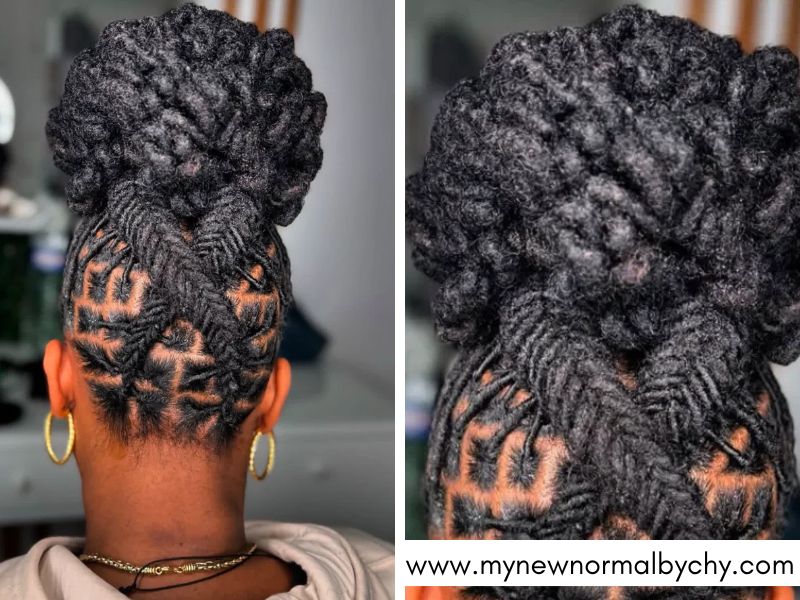
- The Technique: Starting from one side of your head or the nape of your neck, gather clusters of three adjacent locs. Continually cross the outer locs over the middle strand while gathering new locs into the bundle as you move across your scalp. Guide these heavy, rolled tracks upward toward the crown of your head, securing the ends into a clustered pompadour or a cascading fountain of loose loc tips.
- Why it works for thick hair: Barrel twists anchor tightly to the scalp grid without relying on tight rubber bands. This clean parting keeps your thick roots compressed, organized, and smooth for extended periods.
You will also like
Aesthetic Plus-Size Summer Outfit Ideas That Look Expensive
Plus Size Fashion Mistakes That Secretly Ruin Your Outfits
How To Build A Capsule Wardrobe On A Budget
Sculpted Braids and Twisted Loc Sets
4. Jumbo Rope Twists (Two-Strand Loc Twists)
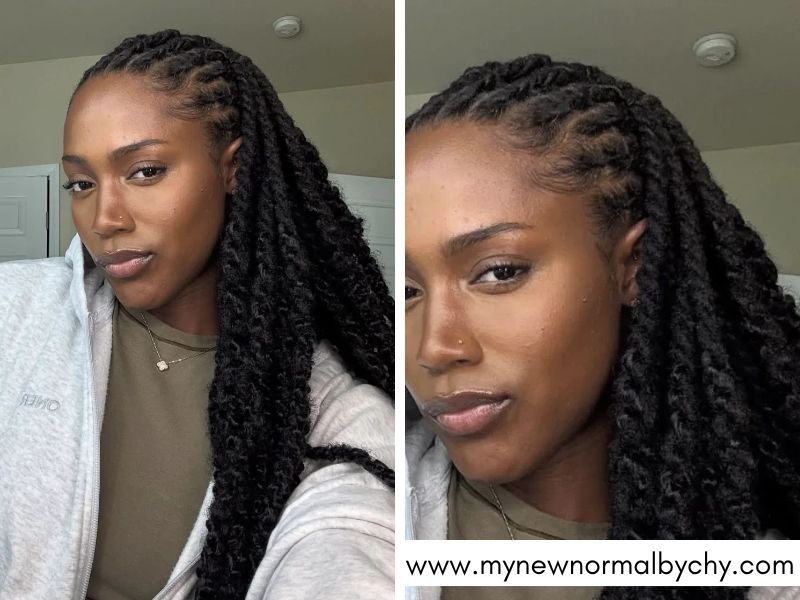
Rope twists are a staple style that can be worn for several weeks before being unraveled into a crinkled texture.
- The Technique: Take two adjacent, matured long locs (or two small clusters of microlocs) and twist them firmly around each other from root to tip. Secure the very ends with small, non-snag silicone bands. For a dramatic look, twist four or six locs together into mega-rope sections.
- Why it works for thick hair: Thick natural hair gives rope twists a chunky, dimensional presence. The natural texture of the locs prevents the twists from slipping or unraveling, providing a highly reliable protective style.
5. Three-Strand Fishtail and Goddess Braids
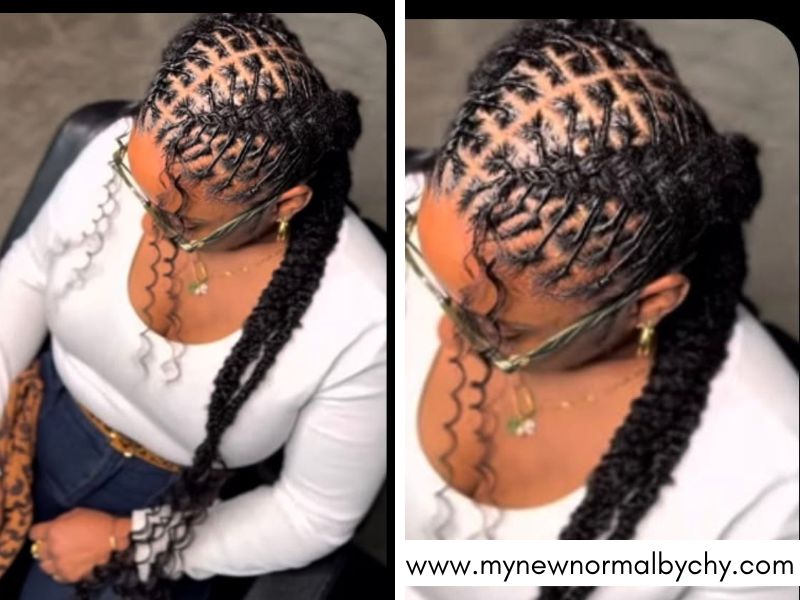
- The Technique: Gather all your locs into a low rear position. Divide the mass into three thick sections and weave a single, thick classic braid down your back. Alternatively, try a fishtail method by pulling thin outer locs from two main back sections and crossing them over into the center alternate side consecutively.
- Why it works for thick hair: The sheer density of your natural hair creates a thick, substantial braid that stays securely in place without flipping or shifting. This is an ideal option for minimizing hair movement during high-activity days or athletic workouts.
Half-Up, Half-Down Variations
6. The Hollywood Side-Swoop with Rear Cascade
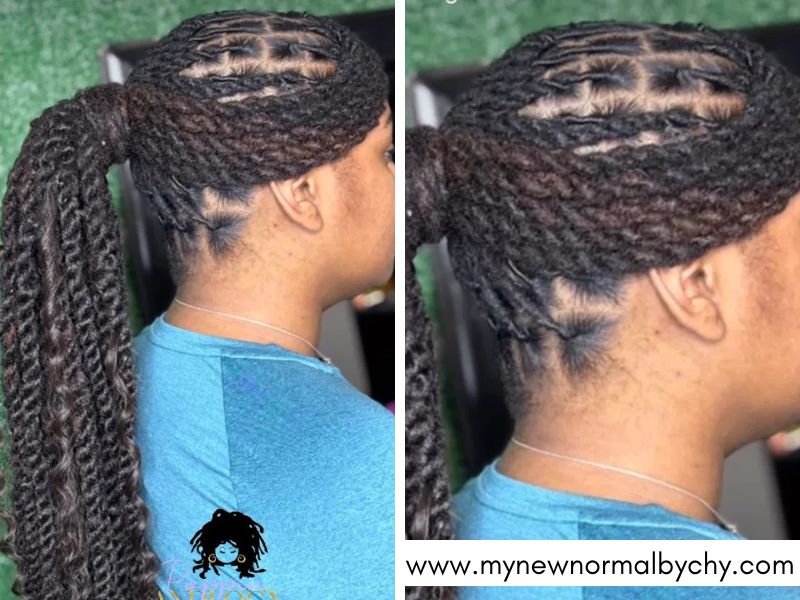
- The Technique: Divide your front hair horizontally, setting aside a small section near your temple for a deep side part. Drape six to eight long front locs smoothly across your forehead to form a elegant side swoop. Guide this swoop over your ear and pin it firmly behind your head with heavy-duty hairpins. Gather the top-crown locs into a small ponytail, and let the entire back section hang completely loose down your shoulders.
- Why it works for thick hair: Thick hair gives the front swoop an opaque, smooth appearance that cleanly hides parting lines, while the dense back section creates a luxurious backdrop.
You will also likeShort Summer Nail Ideas You’d Love
Natural Looking Nails That Stand Out
20 Short Summer Nail Ideas For Ladies Who Like To Keep It Simple
7. Twin Space Buns with Free-Flowing Back
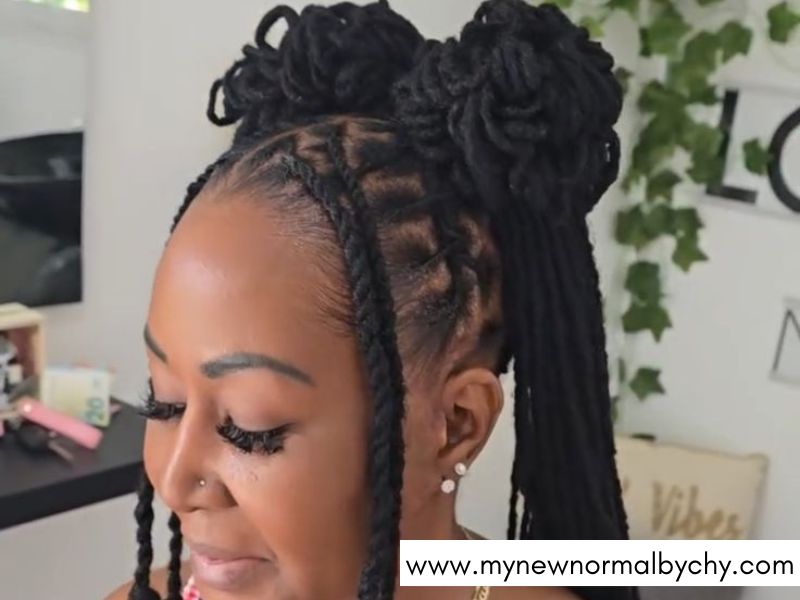
- The Technique: Part the upper half of your locs down the center line of your scalp. Roll each side into a neat, circular top bun sitting over your temples, securing them gently. Leave the remaining bottom half of your locs to cascade freely down your spine.
- Why it works for thick hair: Splitting the upper top-knot into two separate buns significantly lowers localized pulling on your scalp. This makes it a highly comfortable, all-day choice for high-density hair textures.
Texturised and Curled Long Loc Styles
8. Pipe-Cleaner and Flexi-Rod Spiral Sets
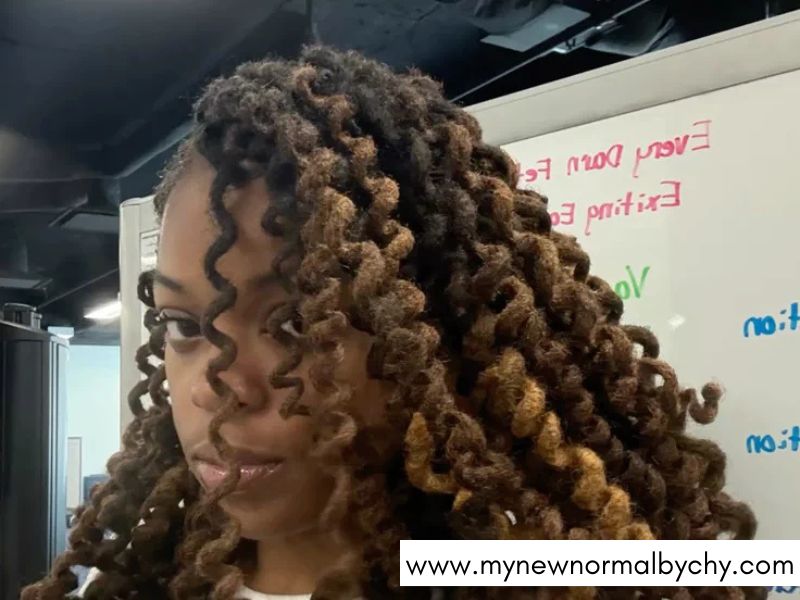
- The Technique: Start with freshly washed, damp locs. Apply a lightweight, alcohol-free setting mousse throughout your hair length. Wrap individual locs (or pairs of microlocs) tightly around flexible foam rollers or bent pipe cleaners, moving from the ends all the way up to your roots. Sit under a warm, hooded hair dryer until the core of every loc is fully dry. Carefully remove the rods and separate the spirals.
- Why it works for thick hair: The springy compression of a spiral rod set temporarily reduces the hanging length of your locs, lifting the weight away from your shoulders and adding massive lateral body that highlights your natural volume.
You will also like;
35 Graduation Cake Ideas That Will Steal The Show At Any Party
Budget-Friendly Graduation Party Ideas Parents Will love
25 High School Graduation Party Ideas To Celebrate Your Teen In Style
9. The Crinkled Loc Braid-Out
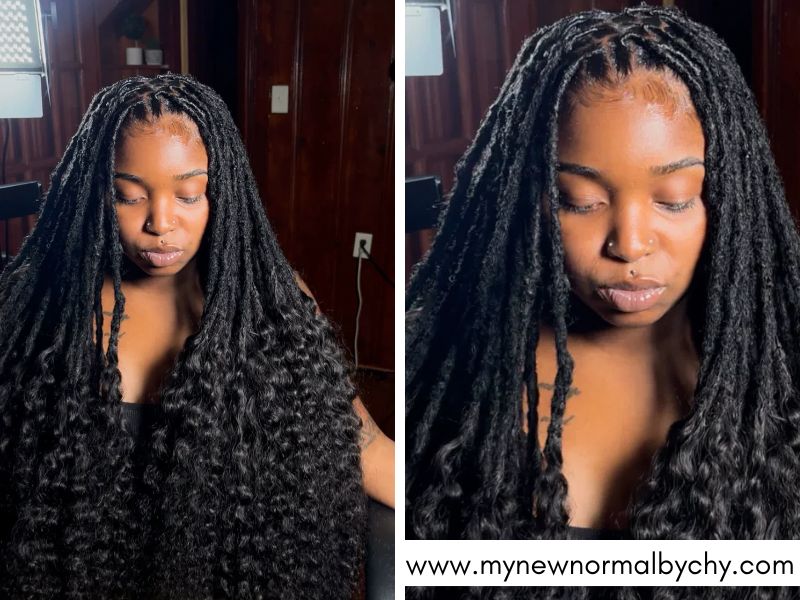
- The Technique: Dampen your long locs slightly with a fine-mist water spray. Group your locs into sections of three and braid them firmly from the roots to the ends. Leave these braids intact for 24 to 48 hours to ensure the inner core sets completely. Carefully unbraid the sections to reveal deep, uniform crinkle waves.
- Why it works for thick hair: Because thick hair holds memory exceptionally well, a loc braid-out can keep its defined wave pattern for up to two weeks, resisting humidity and frizz beautifully.
Free-Form and Semi-Freeform Flow
10. Long Semi-Freeform Cascades
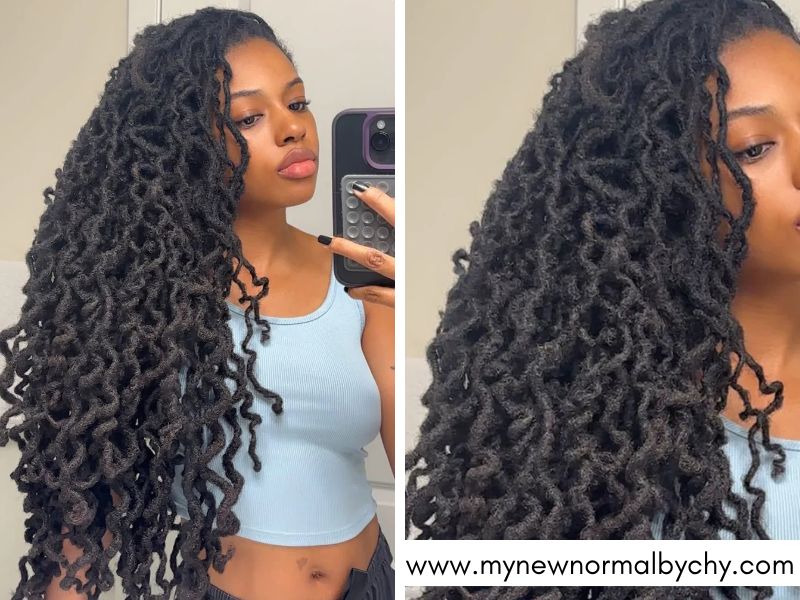
- The Style: Letting thick semi-freeform locs hang loose creates an organic, majestic silhouette. The base of the hair remains thick, dense, and full of natural body, while the long, matured shafts display unique variations in texture and thickness.
- Why it works for thick hair: This style completely avoids the tension caused by frequent palm-rolling or tight interlocking. It allows your scalp to rest and gives your roots the freedom to grow out thick and strong to support long-term hair length.
Step-by-Step Tutorial: The Ultimate Tension-Free Low Crown Braid
1: Prep and Hydration
2: Sectioning
3: Loose Base Braiding
4: Wrapping the Crown
Long Loc Styles for Women Maintenance and Weight Management Guide
The Washing and Rinsing Strategy
- Dilute Your Shampoo: Never pour thick, creamy shampoo directly onto your scalp or down the length of your locs. It can easily get trapped inside the dense cores of your hair, leading to lint buildup and product residue. Instead, mix a clarifying, residue-free shampoo with water in an applicator bottle before applying it to your scalp.
- Focus on the Scalp: Concentrate your washing efforts on cleansing your scalp. The lather will naturally run down the lengths of your locs when you rinse, cleaning them safely without excessive bunching or rubbing.
- Rinse Thoroughly: Spend twice as much time rinsing your hair as you did washing it. Ensure the water runs completely clear from the ends of your locs to prevent any buildup.
The Extended Drying Protocol
- The Squeeze Method: Once you step out of the shower, do not wring your locs out aggressively. Instead, work in sections and gently squeeze the water out, moving from the roots down to the tips.
- Microfiber Towel Wrap: Wrap your long locs in a large, ultra-absorbent microfiber towel or a soft cotton t-shirt for at least 30 minutes. This draws out the initial heavy moisture without creating surface frizz.
- Air Drying and Hooded Dryers: Whenever possible, wash your hair early in the day to allow your locs plenty of time to air dry completely. If you are short on time, use a soft bonnet dryer attachment on a medium heat setting to thoroughly dry the centers of your thick sections. Always ensure your locs are 100% dry before tying them up or going to sleep.
Night-Time Care for Long Locs Styles for Women
- Use a Satin Bonnet or Loc Sock: A standard satin bonnet often cannot hold the length and weight of thick locs. Look for an extra-long, open-ended satin “loc sock” or an oversized bonnet designed specifically for long hair. This keeps your locs neatly contained without compressing them uncomfortably against your neck.
- Upgrade to a Satin Pillowcase: As an extra layer of protection, use a smooth satin pillowcase. If your bonnet slips off during the night, your hair will slide easily across the satin surface without catching or losing moisture.
Leave a Reply