Let me guess, you’ve been eyeing that patch of backyard, the one that’s currently just grass, a forgotten garden hose, and maybe a lawn chair that’s seen better days , and thinking, “I could do something with that.” Something that gets your toddler outside and moving. Something that doesn’t require you to pack a bag, load up the car, and drive twenty minutes to the nearest park every single time they need to burn off energy.
Here’s the good news: you absolutely can. And you don’t need a sprawling backyard, a contractor, or a budget that makes you faint. What you need is a little intention, a few smart choices, and someone to walk you through it.
That’s what today is for. Let’s turn that patch of outdoor space, however big or small it is, into a toddler play area that your little one will actually use, that you’ll actually love, and that will make your life just a little bit easier.
Of course, outside time for toddlers isn’t a luxury. It’s a “lifesaver”, for them and for you.
Start With the Space You Have (Not the Space You Wish You Had)
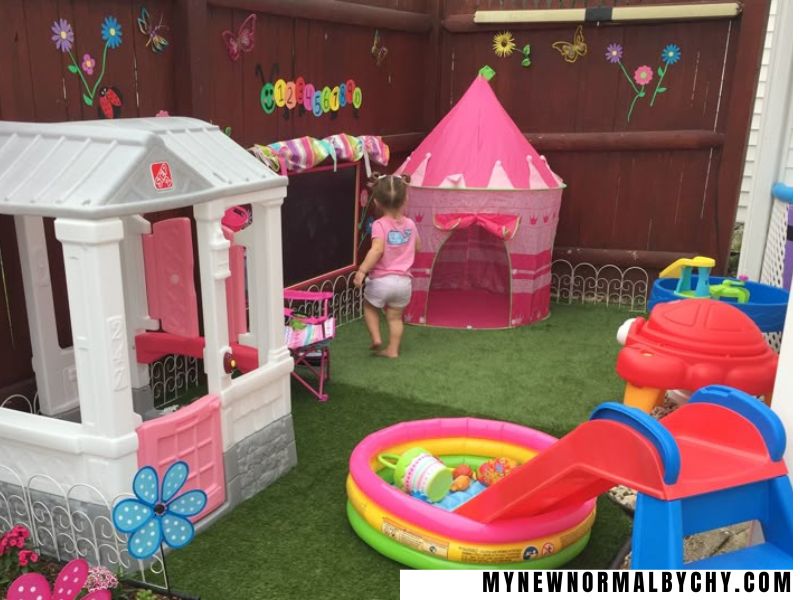
Before you order a single thing or move a single blade of grass, take ten minutes to really look at your backyard. Not with disappointment, with “possibility”.
Walk the space. Notice where the sun hits hardest and at what time of day. Notice if there’s a natural patch of shade from a tree or a fence.
Think about which areas are visible from your kitchen window or back door, because if you can’t see your toddler while you’re getting lunch ready, that spot isn’t working for you.
Ask yourself these three questions:
1. How much space do I realistically have?
Even a 10×10 foot area is enough to create a meaningful play zone for a toddler.
2. What’s the surface currently?
Grass, concrete, dirt, or pavers all require slightly different approaches.
3. What’s my budget?
Be honest. A $200 setup done thoughtfully will serve you far better than a $1,000 setup bought in a panic with no plan.
Write down what you’ve got. Then we build from there.
How to Set Up a Small Backyard Play Area for Toddlers
Safety First – Always Safety First
I know you know this, mama. But it’s worth saying out loud because when we’re excited about something, and setting up a play space is exciting, it’s easy to move fast and skip the boring stuff. The boring stuff keeps your toddler safe. So let’s cover it.
1. Check Your Fencing
If your backyard isn’t fully fenced, that needs to be your very first step, full stop. Toddlers are fast, fearless, and have absolutely no sense of danger. A fence isn’t optional.
If a full fence isn’t possible right now, create a clearly defined enclosed play zone using a portable toddler play yard or safety panels.
2. Scan for Hazards
Get down to toddler eye level, yes, actually get on your knees, and look at the space from their perspective. Check for sharp edges, rusty nails, low-hanging branches, garden tools left out, toxic plants, or anything they could climb and fall from unsafely. Remove or secure anything that shouldn’t be there.
3. Think About Your Ground Surface
Grass is great but can get muddy and slippery. Concrete is hard on little falls. If your toddler is going to be climbing, jumping, or running, which they absolutely will be, consider adding a soft surface under and around play equipment. Rubber mulch, foam interlocking tiles, or play sand all cushion falls beautifully. Even an outdoor rug over a flat surface makes a difference.
4. Sun and Heat Safety
Shade is non-negotiable for little ones, especially in summer. If you don’t have natural shade, a pop-up canopy, a sail shade, or a simple outdoor umbrella are all affordable solutions. Always have sunscreen, water, and a hat situation sorted before play time begins.
The Must-Have Elements of a Toddler Play Area
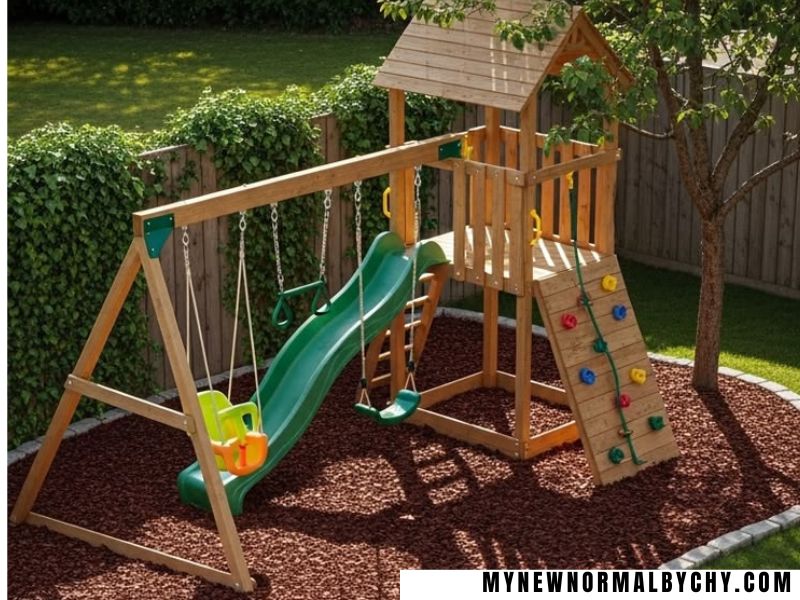
Here’s where the fun starts. A great toddler play area doesn’t need to be complicated, it just needs to hit a few key categories that match how toddlers actually play and develop.
You may also like:
20 Creative Backyard Play Areas for Kids on a Budget
1. A Climbing and Sliding Structure
Toddlers are “climbers”. It is their whole personality. A small toddler-appropriate climber with a slide is one of the best investments you can make for a backyard play space. You don’t need a full swing set situation, there are compact, affordable options designed specifically for small yards and toddler-sized bodies. Look for one with smooth edges, secure handrails, and a weight limit that gives you room to grow.
If a full structure isn’t in the budget yet, a simple toddler slide on its own works just as well. They will go up and down that thing a hundred times without getting bored. Toddlers are nothing if not consistent.
2. A Sensory Play Zone
Toddlers learn through their senses, touching, pouring, scooping, squishing. A sensory play zone is one of the most developmentally rich things you can add to a play area, and it doesn’t have to cost much at all.
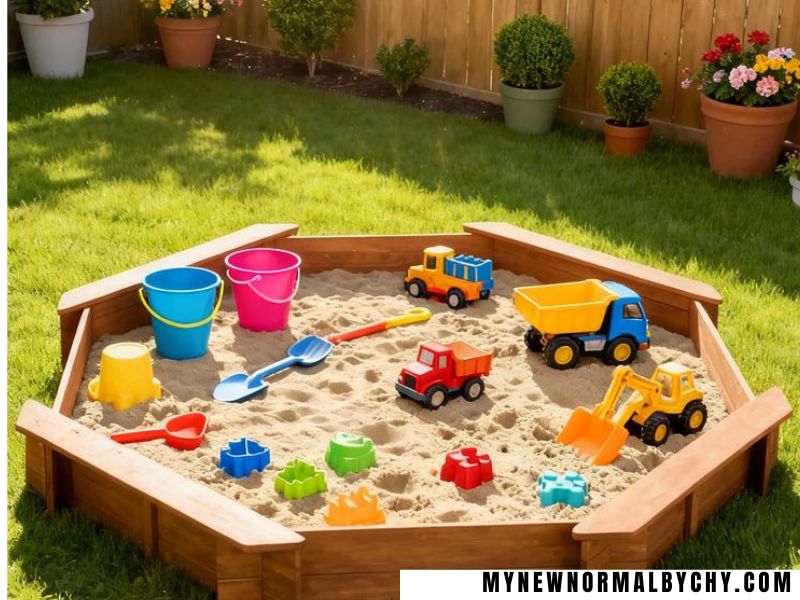
A small sandbox is the classic choice. Even a plastic storage bin filled with play sand works perfectly.
Add a few scoops, cups, and small toys and you’ve got an activity that will keep them busy for a solid stretch. Water play is another winner , a toddler-sized water table, or even a shallow plastic tub with some cups and funnels on a warm day, is pure magic.
On cooler days, swap the water for dried rice, dried beans, or kinetic sand for a mess that stays outside where it belongs.
3. An Open Space to Run
Don’t underestimate the power of just… space. Toddlers need room to run, spin, roll, and fall safely. Keep a section of your play area clear and open, no equipment, no obstacles, just room to move.
This is where the pure joy happens. The chasing bubbles, the running-for-no-reason, the falling-on-purpose-into-the-
4. A Cozy Nook or Quiet Corner
As much as toddlers love big movement, they also need somewhere to land. A small toddler tent, a teepee, or even a simple pop-up canopy with a blanket and a few books creates a little retreat that toddlers absolutely love.
This is their space within a space, somewhere to rest, flip through a book, have a snack, or just sit and observe the world.
It also doubles as a shaded spot for you to sit while they play nearby. Win.
5. Outdoor Toys That Encourage Active Play
A well-chosen handful of outdoor toys can extend play time significantly. Think:
– A toddler-sized basketball hoop (low to the ground, adjustable)
– A set of outdoor balls in different sizes
– Sidewalk chalk for driveways or paved areas
– Bubbles- always bubbles
– A toddler balance bike or ride-on toy if you have the space
– Gardening tools (toddler-sized!) if you want to create a little digging area
You don’t need all of these. Pick two or three that match your toddler’s current obsessions and rotate them seasonally to keep things feeling fresh.
How to Set Up a Small Backyard Play Area for Toddlers
How to Define the Space Without Breaking the Bank
One of the things that makes a backyard play area feel intentional, rather than just a bunch of stuff scattered on the grass, is definition. Giving the play area a clear boundary makes it feel like “their” space, and it also helps with cleanup and containment.
You may also like:
15 Budget-Friendly Jungle Gym Ideas for Moms
Budget-Friendly 4th of July Party Setup for Moms
How to Set Up a Small Backyard Play Area for Toddlers
1. Use Outdoor Rugs to Anchor Zones
An outdoor rug is one of the easiest and most affordable ways to define a play zone. Put one under the sensory table, one in the quiet corner, one in the main play area. Different textures and colors help toddlers (and honestly, you) visually understand that each zone has a purpose.
2. Try Rubber or Foam Flooring Tiles
Interlocking foam or rubber tiles are perfect under climbing equipment or in high-activity zones. They’re easy to install, easy to clean, protect against falls, and can be rearranged or expanded as your needs change.
3. Use Planters or Low Fencing to Create Edges
A row of simple planters, a low picket border, or even a line of stepping stones can define the edge of a play area without hard fencing. This works especially well if you want to keep a portion of the yard open for adult use, the visual boundary helps toddlers understand where their space is.
Making It Beautiful (Because You Have to Look at It Too)
Here’s something nobody says enough: your backyard play area should be something “you” enjoy looking at. You are going to spend a lot of time out there, sitting on a blanket while your toddler plays, sipping a coffee that’s gone cold, watching them discover that dirt is interesting. The space should feel good to you too.
This doesn’t mean spending extra money on aesthetics. It means being intentional about the things you choose.
Pick a color palette for your equipment and accessories, neutral tones with a pop of color, or a specific palette that matches your outdoor space, and stick to it. Avoid the chaotic rainbow of mismatched plastic that happens when you just grab whatever is on sale. One cohesive set of outdoor toys looks a hundred times better than fifteen random pieces.
Add a little greenery. A potted plant or two at the edge of the play area, a small herb garden your toddler can “help” water, some flowers along the fence. Nature is the best backdrop for outdoor play, and even a small touch of it makes the whole space feel more inviting.
And give yourself a spot. A low camp chair, a folding stool, a outdoor cushion on a step, somewhere you can sit comfortably and be present without hovering.
When you’re comfortable, you stay outside longer. When you stay outside longer, your toddler gets more outdoor time. Everybody wins.
A Simple Setup Plan to Get You Started
Feeling overwhelmed? Let’s break it down into a simple order of operations so you’re not just staring at the backyard wondering where to begin.
1. Assess and clear.
Walk the space, identify hazards, remove anything that doesn’t belong.
2 . Sort your surface
Add mulch, tiles, or sand under the equipment zone if needed.
3. Anchor your main activity
Choose one climbing structure or slide as your centerpiece and place it first.
4. Add a sensory zone.
A sandbox or water table, positioned where mess is manageable.
5. Create the quiet corner
A tent, teepee, or shaded nook with a blanket and a few books.
6. Define the space
Rugs, tiles, or planters to give the area clear edges.
7. Add a handful of toys
Choose two or three and leave room to rotate.
8. Add your chair
Because you live here too.
That’s it. Eight steps and you have a play space your toddler will absolutely love.
The Bigger Picture: Why This Matters
Here’s what I want you to remember on the days when the setup feels like a lot, when the sandbox has gotten all over the patio, when the slide is wet from overnight rain and you’re drying it off with a towel at 8 AM:
Outdoor play is one of the most powerful things for a toddler’s development. It builds gross motor skills, supports sensory development, encourages independence, reduces screen time naturally, and, this one is big, it genuinely improves their mood and sleep.
A toddler who has spent an hour outside playing hard is a toddler who eats better, naps better, and is just ” easier” to be around.
And a backyard play space makes that outdoor time accessible every single day. Not just on the days when you have the energy to go somewhere. Every day. Before breakfast. After lunch. During that unpredictable window between nap and dinner. Whenever you need it.
You’re not just setting up a play area. You’re building a rhythm into your days, one that works for your toddler and gives you a little breathing room too.
Leave a Reply